How Should an Autonomous Vehicle Ask for Help?
The grammar of takeover requests — tone, timing, and trust.
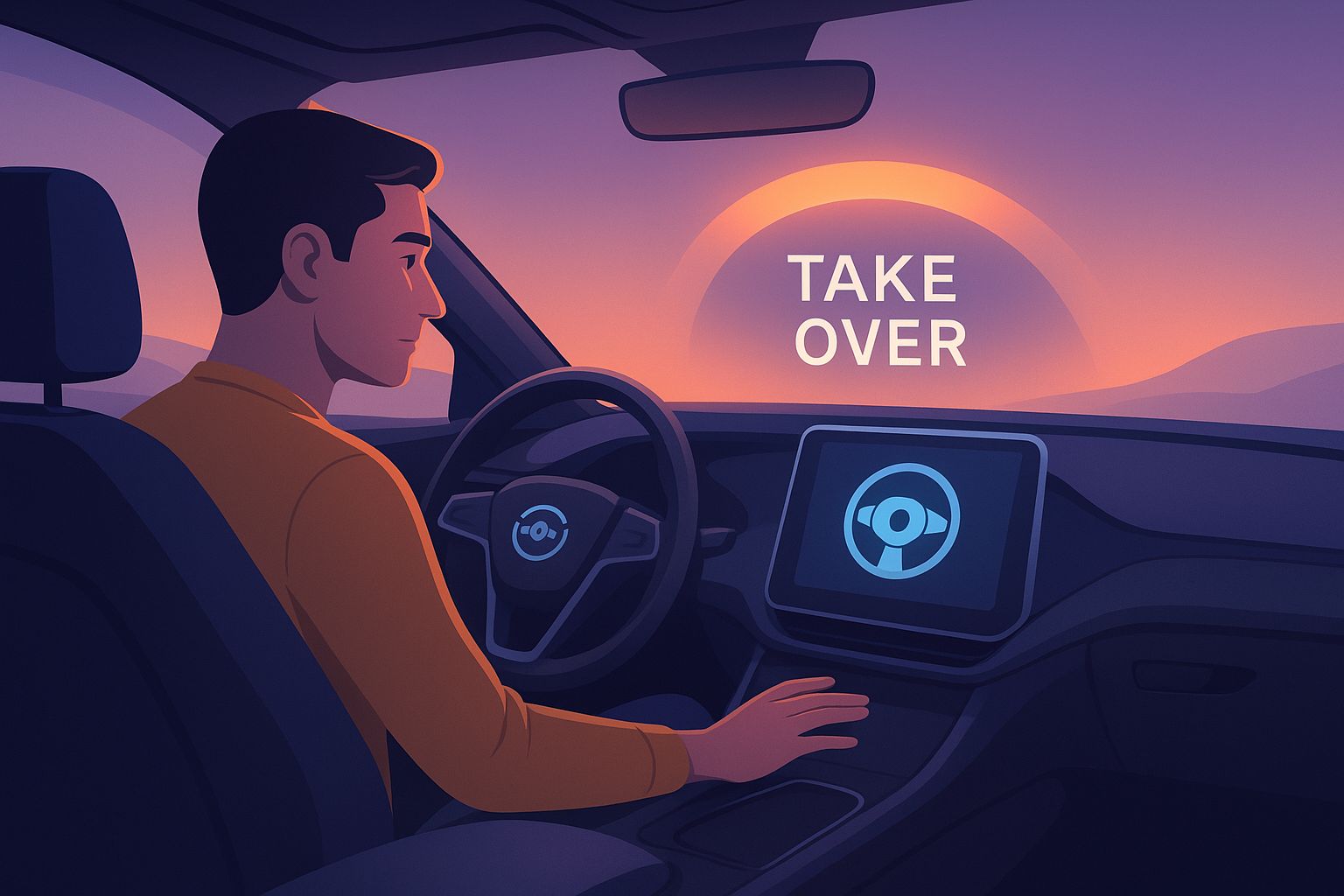
If your autonomous vehicle needed your help, how should it ask?
As cars become more self-driven, one of the most intriguing challenges in Human Vehicle Interaction is the "takeover" moment when your car asks you to step back in and take control of the vehicle. This transition is not just a technical handoff — it is a deeply human moment where trust, clarity, and emotional readiness all intersect.
Would you want it to nudge you with sound, flash lights, gently vibrate your seat, or even use scent?
Designing the grammar of urgency
Through my research, I have been thinking about how different sensory channels can work together to create a clear, calm request rather than a jarring alarm. Visual cues on the dashboard or heads-up display can draw attention without startling. Auditory signals, when designed with the right tone and frequency, can communicate urgency without inducing panic. Haptic feedback through the seat or steering wheel adds a physical layer that feels personal and direct.
What makes this especially interesting is the idea of multimodal layering. A low-urgency situation might begin with a soft ambient light shift and a calm voice prompt. As urgency increases, additional channels activate progressively — perhaps a seat vibration, then a more pronounced visual alert. This staged approach respects the driver's cognitive state and prevents overwhelming them with simultaneous stimuli.
Timing and emotional readiness
Beyond the sensory modality, the timing of the request is equally critical. Research suggests that drivers need adequate preconditioning to mentally switch from a passive monitoring state to an active driving state. A well-designed takeover request does not just say "take control now" — it creates a brief but meaningful window for the driver to reorient, scan the road, and feel confident before assuming responsibility.
The best takeover alert is not the loudest one. It is the one that makes the driver feel prepared rather than ambushed.
I am currently exploring how emotionally intelligent, multimodal alerts can make these transitions feel calm, clear, and trustworthy. The goal is to design a system that respects the human at the center of the loop, communicating with empathy and precision rather than demanding compliance through volume or intensity.