Emotional Mobility.
Non Screen Experience
Co-Creating Multisensory Emotional Regulation in Autonomous Vehicles
As vehicles become more autonomous, the interior shifts from a driving interface into an emotional space. This project explores how sound, light, scent, and texture can support emotional regulation during autonomous travel by allowing users to actively shape their in-car experience. Instead of designing fixed moods, the focus is on adaptability, user agency, and emotional reassurance.
I used co-creation to learn how occupants would combine sensory cues themselves, rather than relying on automated emotion detection.
Autonomy may reduce driving effort while increasing uncertainty and loss of control. This study treats emotional comfort as a core cabin experience.
How might automotive interiors support emotional well-being, not just functionality during autonomous travel?
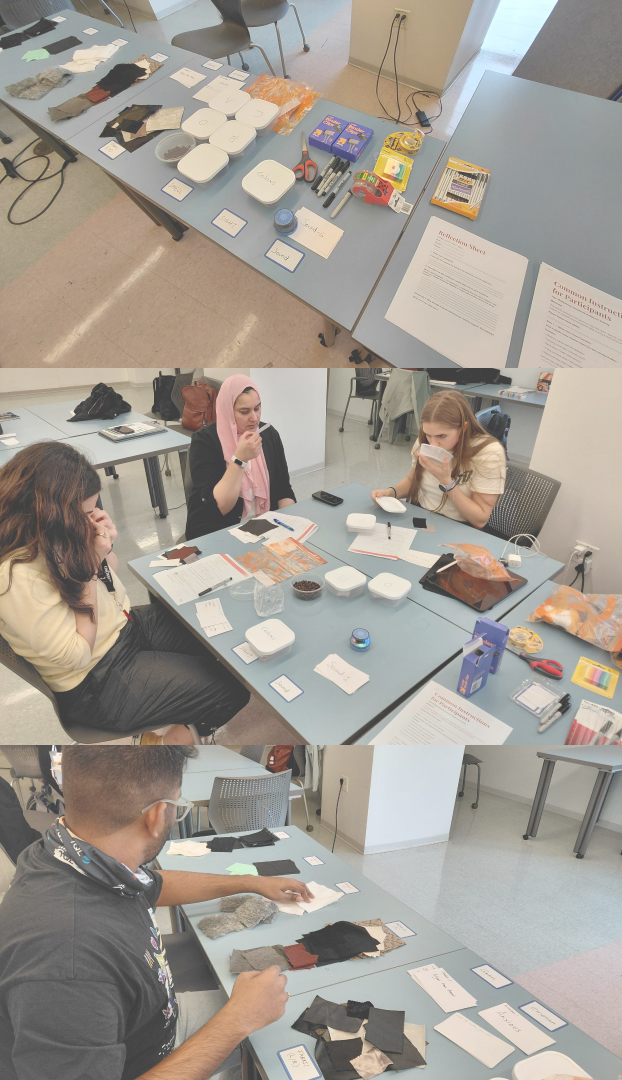
Because emotions can be hard to explain, participants expressed them by arranging sensory materials.
The hands-on format surfaced preferences that conversation alone might miss.
The session begins with the table.
Participants were guided through a structured flow: fill in the context and emotion cards, then name their micro-ambience, and finally we synthesized the data together — translating their choices into emotional patterns.
Five cue families, each broken into subcues.
None of the elements were labeled with predefined emotions, allowing participants to interpret and combine them freely. Each family below lists the subcues participants actually selected, alongside the emotional associations they linked them to.
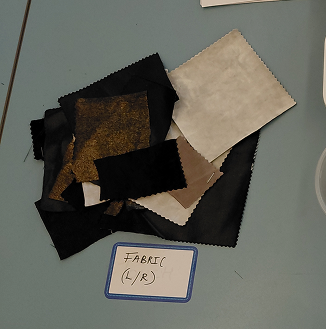
Tactile Cues
Fabric swatches let participants express comfort, grounding, safety, luxury, and sensory reassurance through physical interaction.
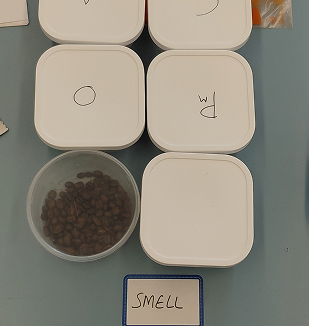
Olfactory Cues
Scent is the fastest human sense — used to trigger memory, regulate mood, and support relaxation, alertness, or emotional recall.
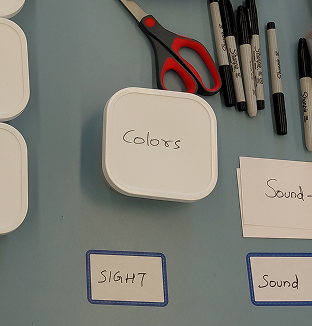
Visual Cues
Participants selected colors and imagined lighting conditions that reflected emotional states across warm, cool, balancing, and natural tones.
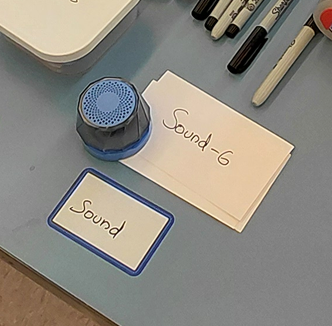
Auditory Cues
Rather than songs, participants selected soundscapes — ambient layers that support focus, regulation, and distraction from negative states.
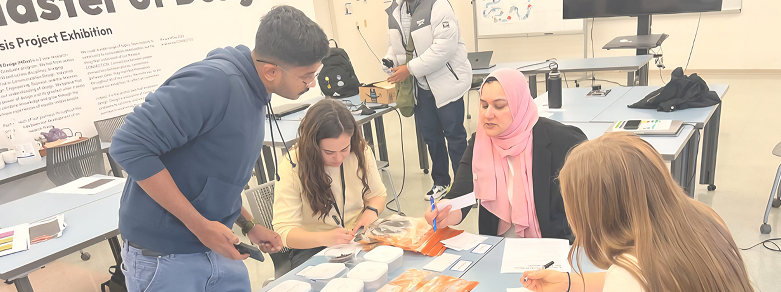
Contextual Cues
Participants never chose cues in isolation — every selection was anchored to a travel context and an emotional state, making context one of the strongest signals in the study.
From context to transition awareness.
Participants built a micro-ambience for a travel context, explained their choices, and considered how needs might change through the journey.
Emotional needs are dynamic, not static.
Participants consistently used sensory cues to regulate emotions rather than decorate the space.
Emotional needs were dynamic, changing over time and context, which made fixed ambiences feel limiting.
Comfort emerged only when multiple senses worked together.
Many choices were shaped by personal memory and past experience.
From abstract insights to buildable interior systems.
I mapped the cues to cabin touchpoints: lighting zones, seat materials, speakers, and air vents.
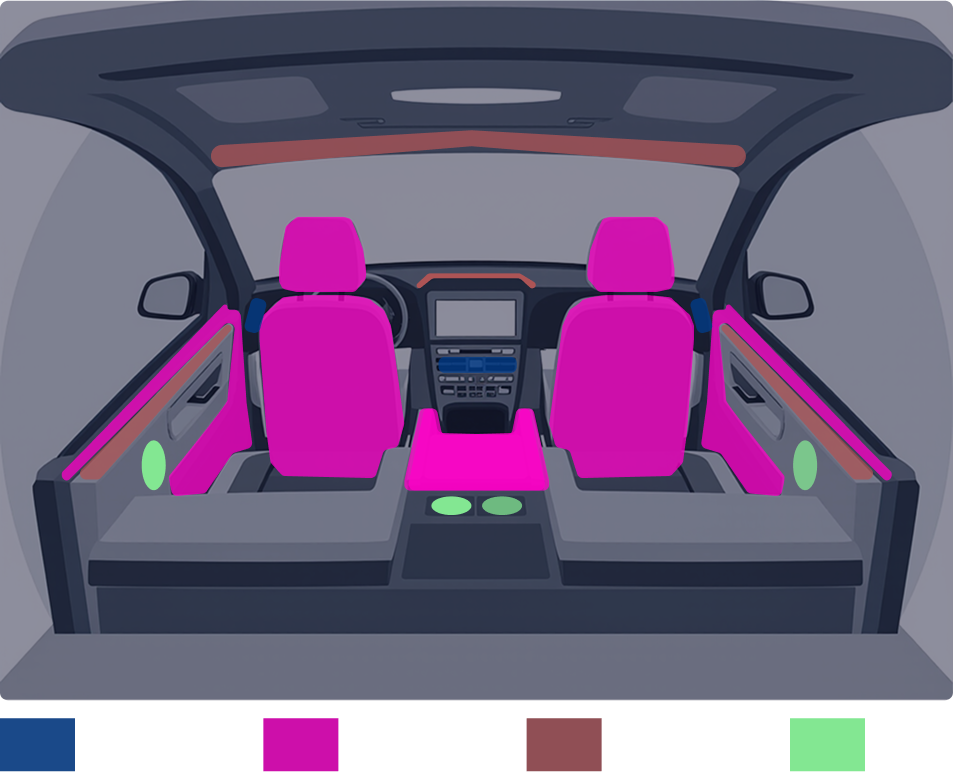
The project shows how cabin UX can address emotional load through coordinated sensory cues and user agency.
A next step would test gradual, adaptive cues across journey phases and changing user preferences.
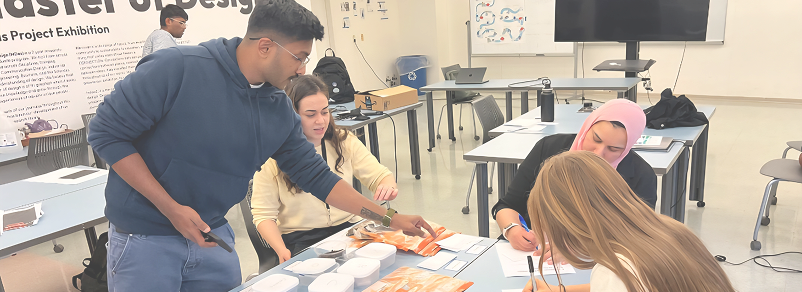
A participant interacting with the materials.
Picking up fabrics, lifting scent containers, and arranging cards — most of the meaning emerged in moments words could not capture.
Users do not want a fixed, designed mood inside autonomous vehicles. They want environments that adapt, respect personal associations, and preserve a sense of control.
Emotional design, when treated as foundational, has the potential to make autonomous travel feel supportive rather than stressful.