Trusting a Robot Guide.
Exploring trust and hesitation in human–robot navigation.
Can people trust a robot to guide them when they cannot see the route?
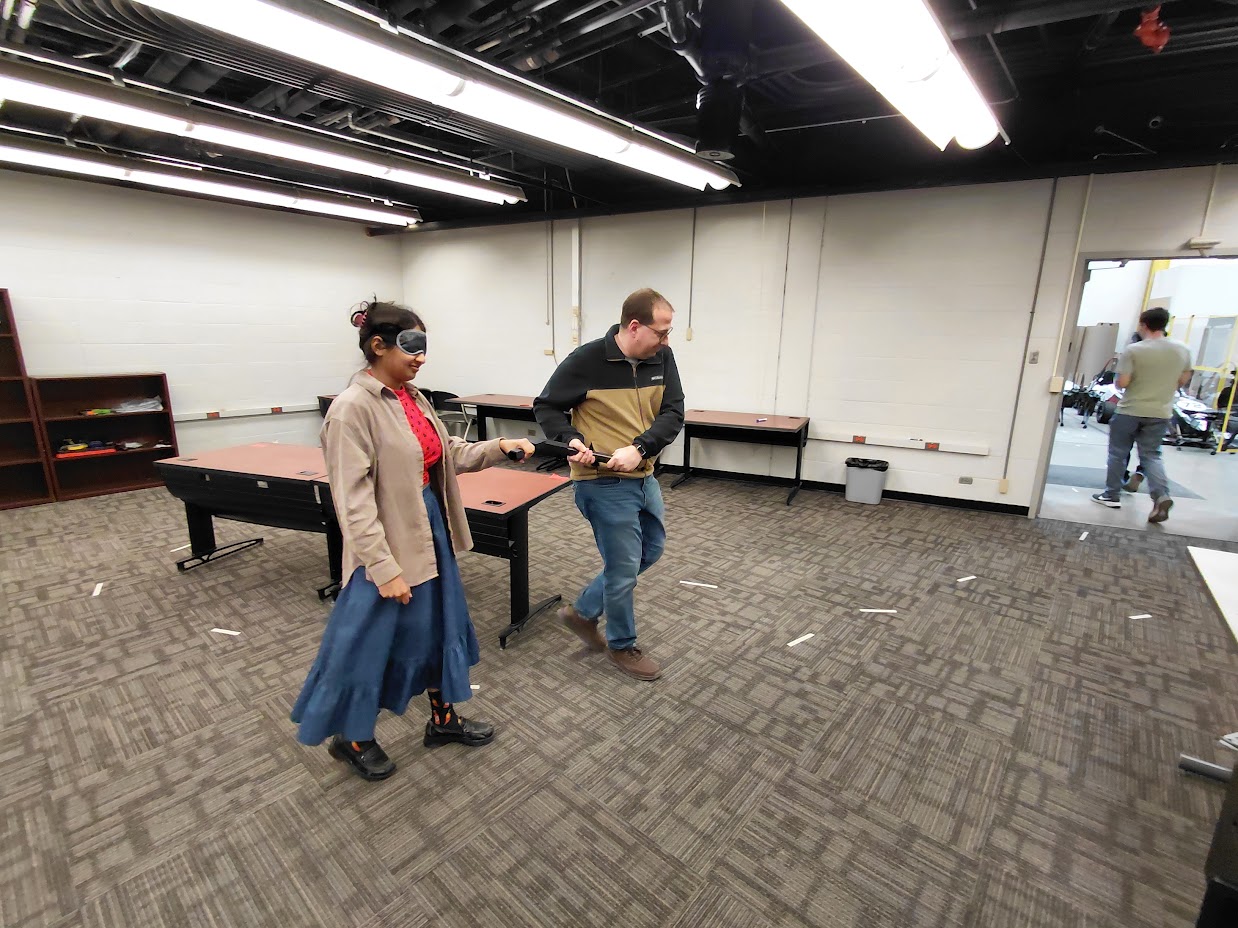
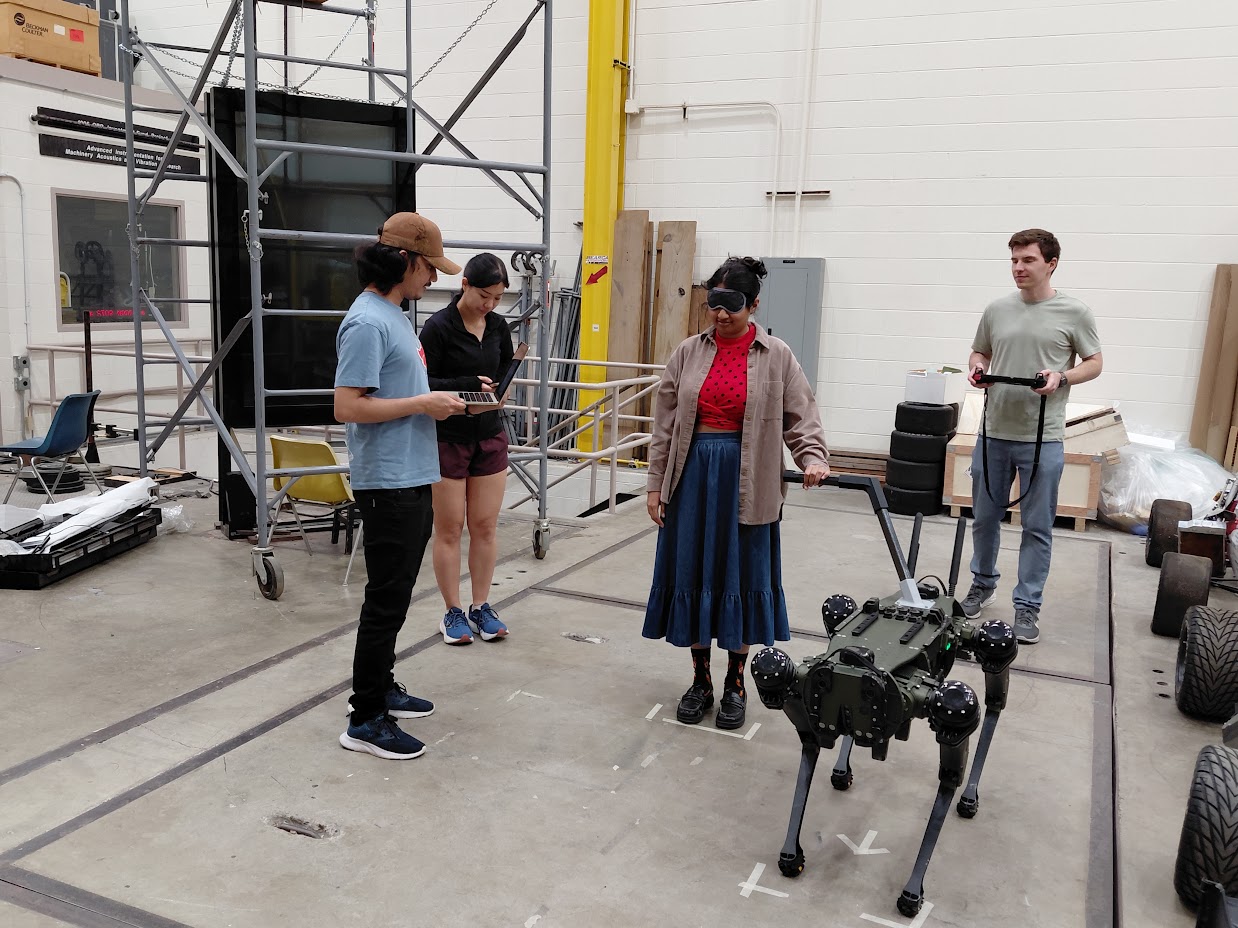
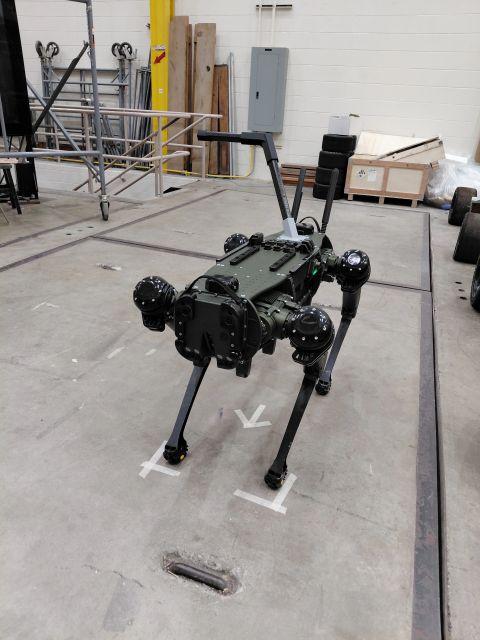
In a study with 11 participants, our five-person team compared blindfolded navigation with a quadruped robot and a human guide. I focused on experience design, observation, and research documentation.
Why guide dogs inspired this research.
Guide dogs combine physical direction, movement cues, and embodied feedback with an established relationship of trust.
They also require training, care, availability, and long-term commitment.
Could a robotic quadruped eventually provide some similar physical guidance functions?
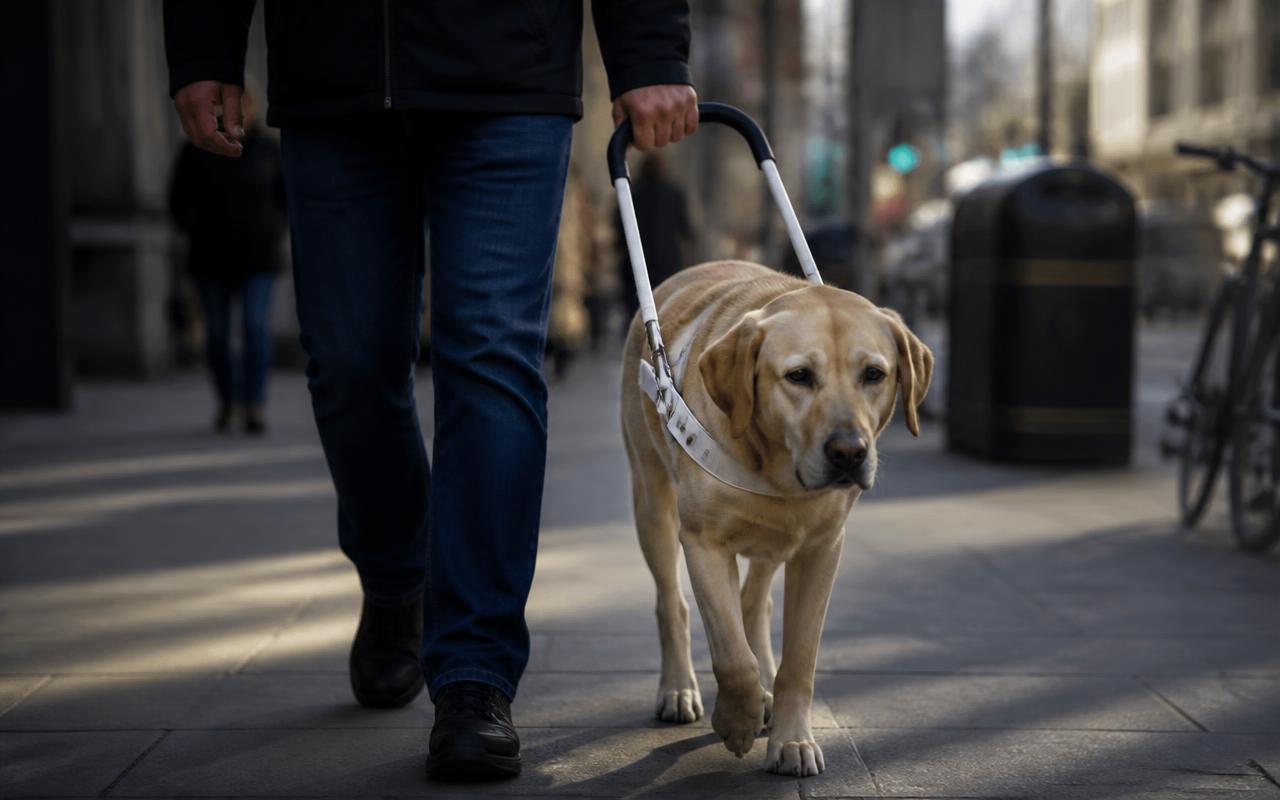
Seeing-Eye Dog
- Physical guidance
- Natural movement cues
- Established human–animal trust
- Requires training, care, and availability
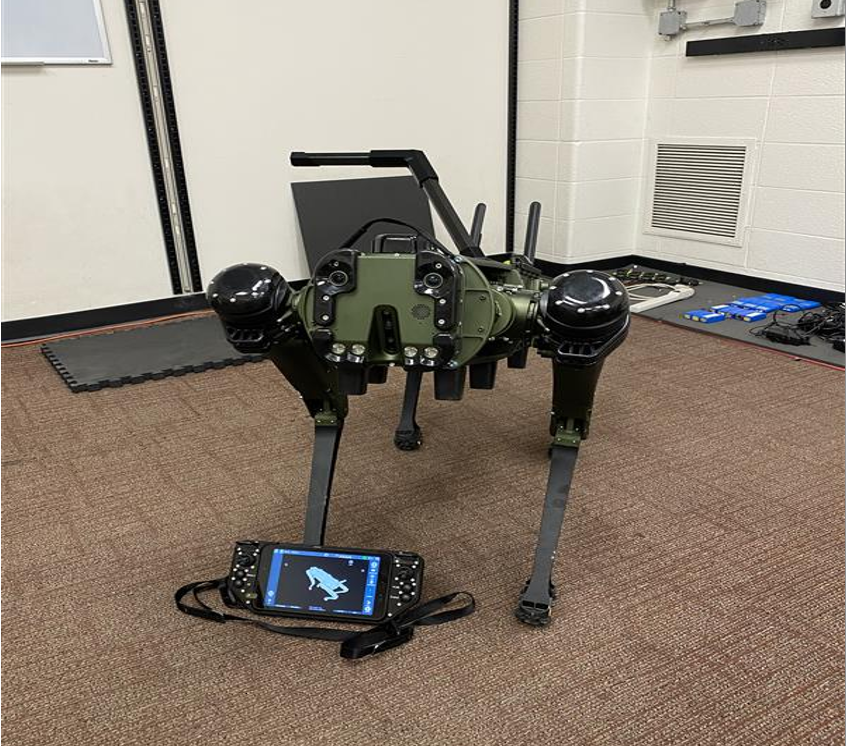
Robotic Guide
- Physical guidance through a handle
- Programmable and repeatable behavior
- Potentially scalable
- Trust and usability still need to be understood
The question became: what happens when the guide is no longer biological, but robotic?
What does it take to trust a non-human guide?
Physical guidance raises a harder trust question than a screen: can people rely on a robot when visual information is removed?
How does robotic guidance affect perceived trust, comfort, and ease of navigation compared with human guidance?
How comfortable participants were relying on robotic guidance.
Perceived comfort and safety between guidance conditions.
How easily participants anticipated the guide's movement.
How tactile and auditory cues shaped interpretation.
One participant. Two guides. One route.
Each participant completed the same blindfolded route with a human guide and a robot guide, creating a within-subject comparison.
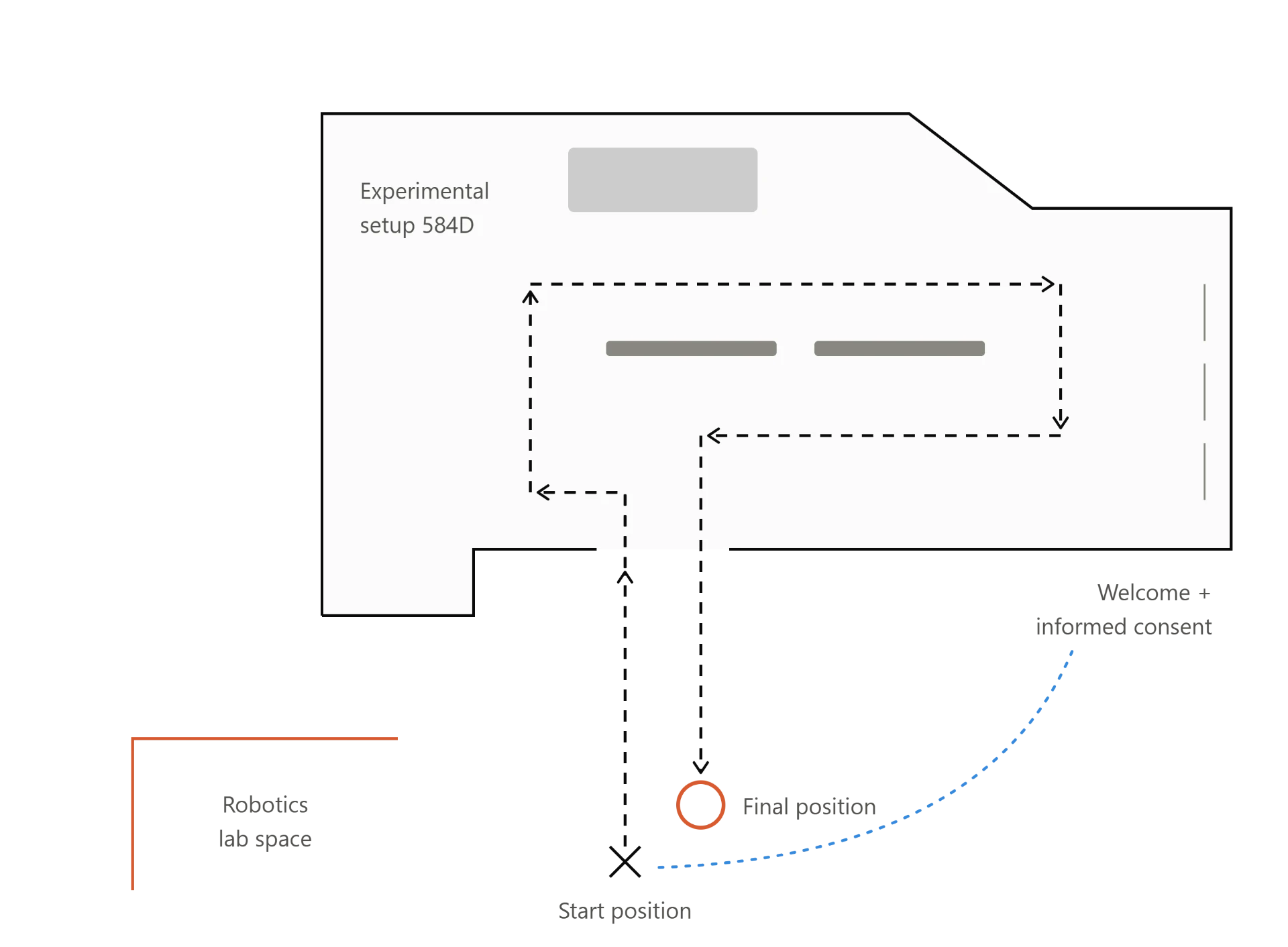
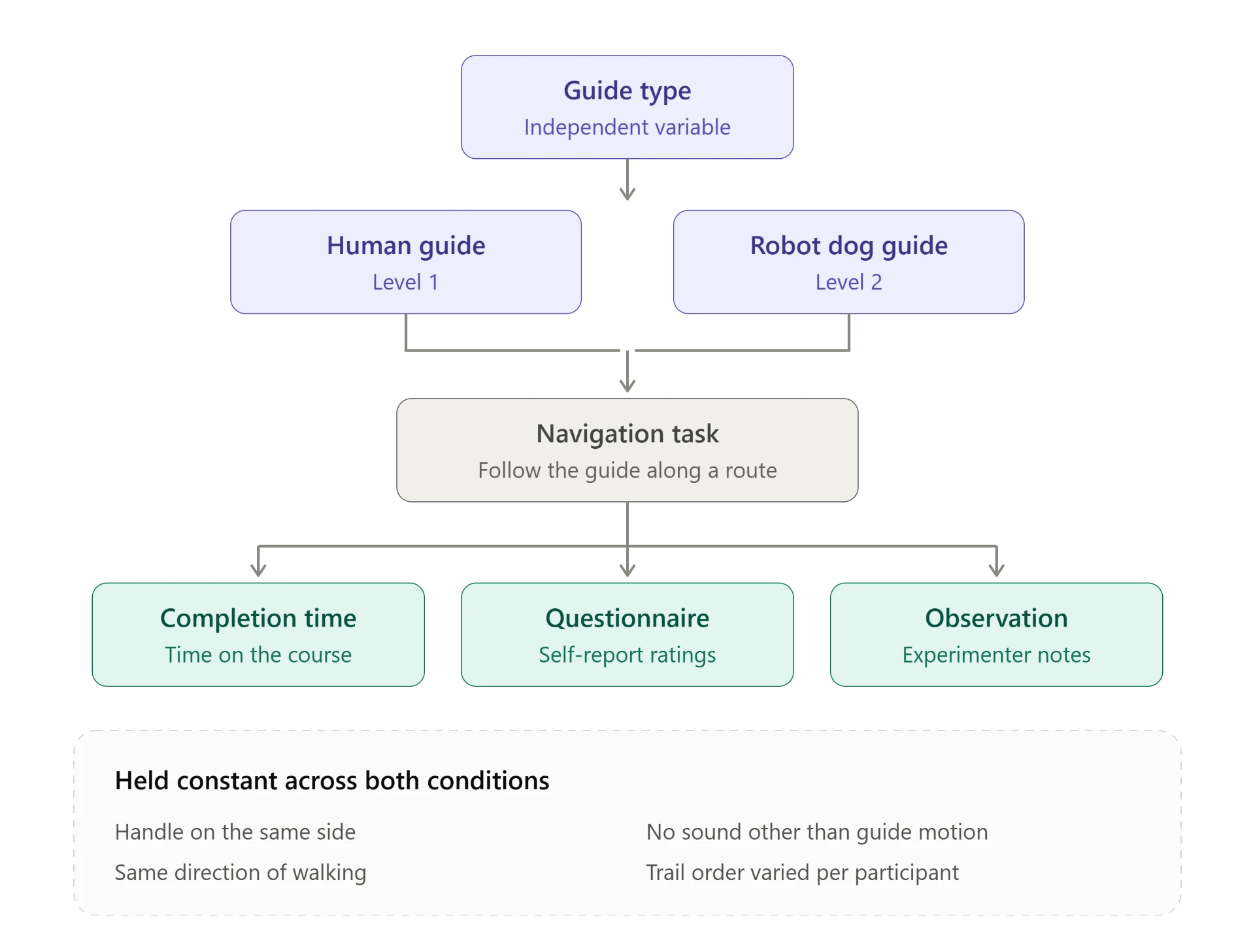
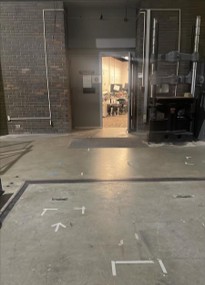
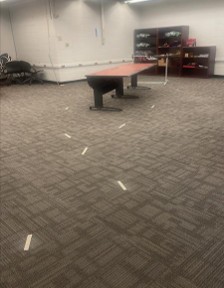
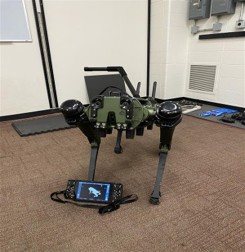
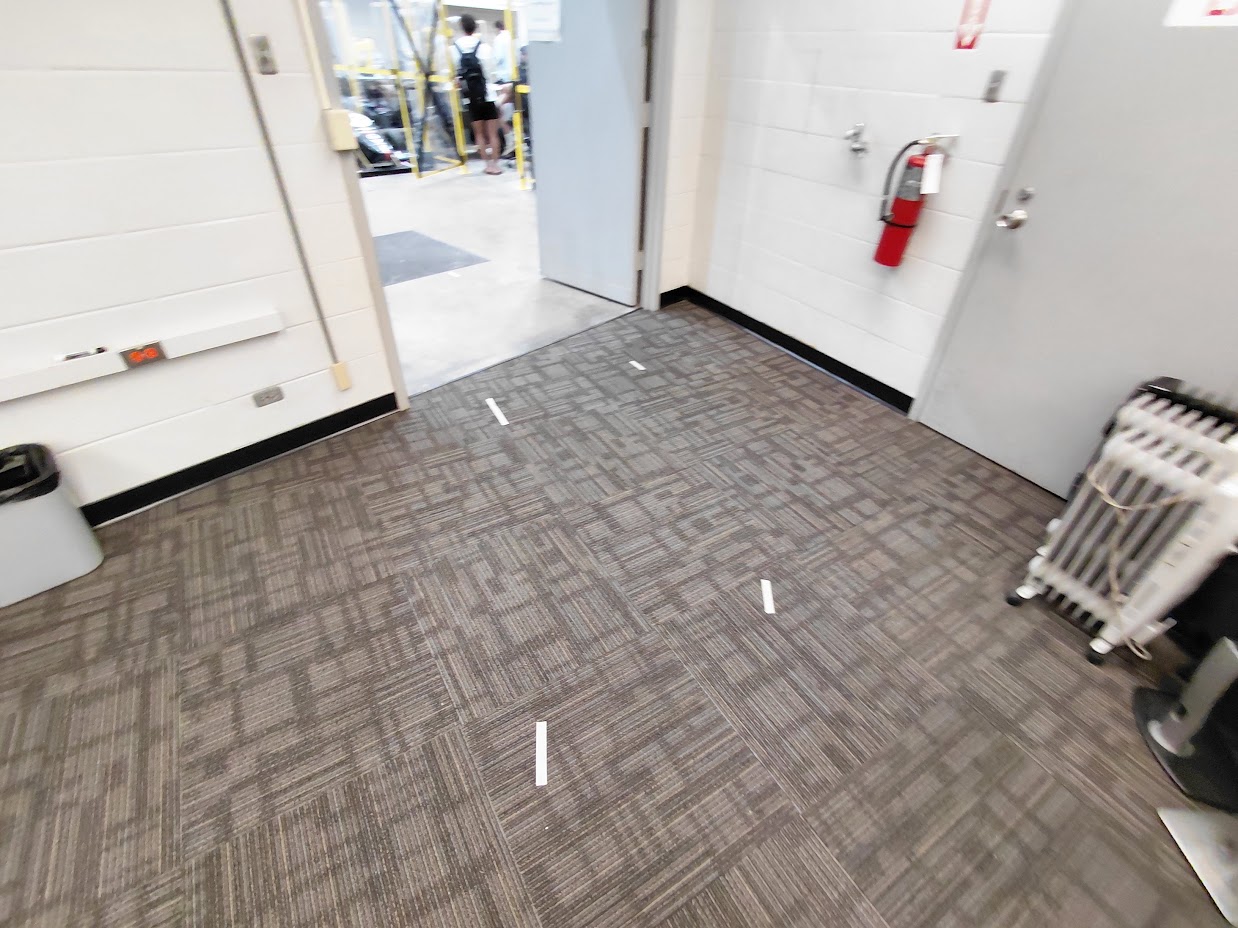
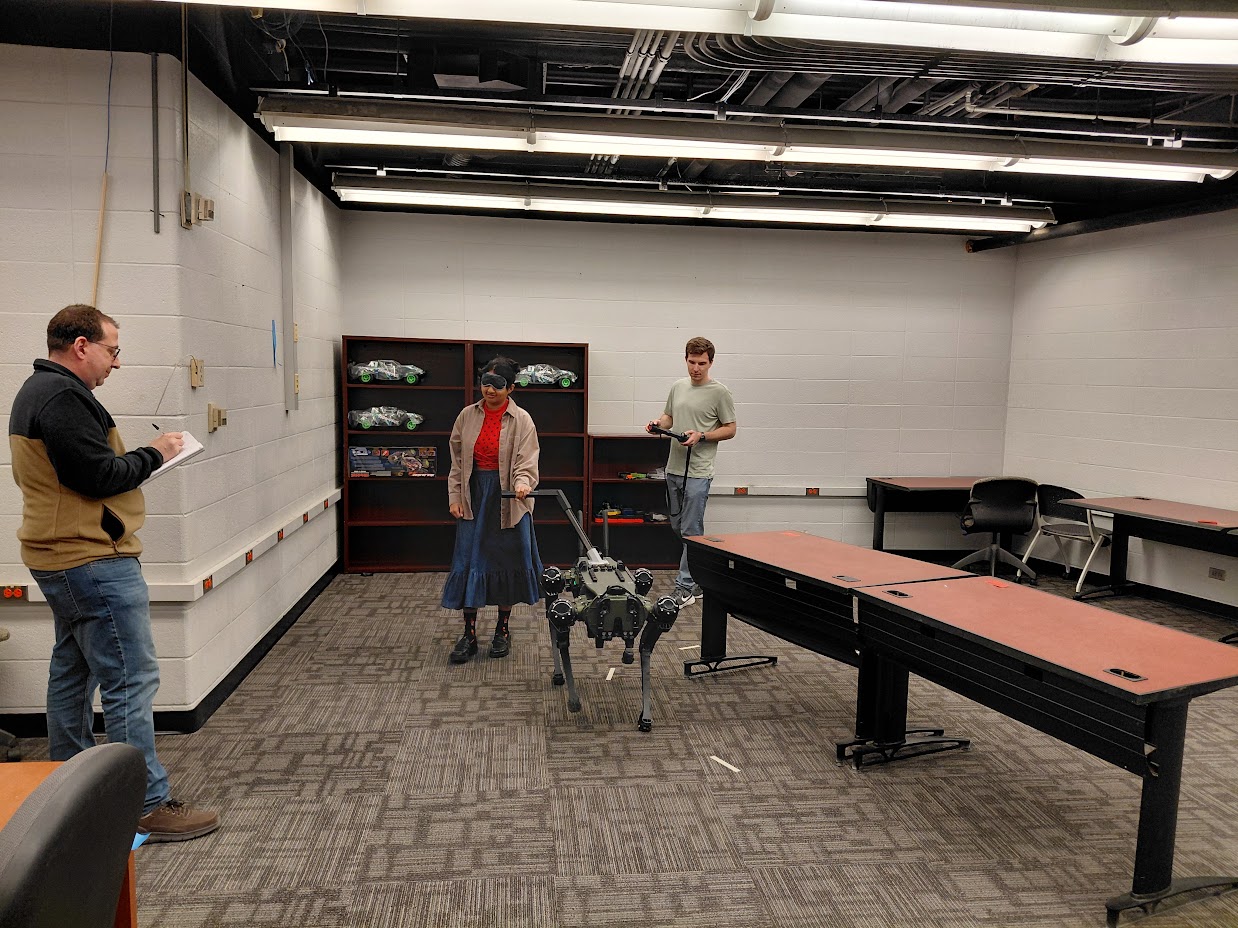
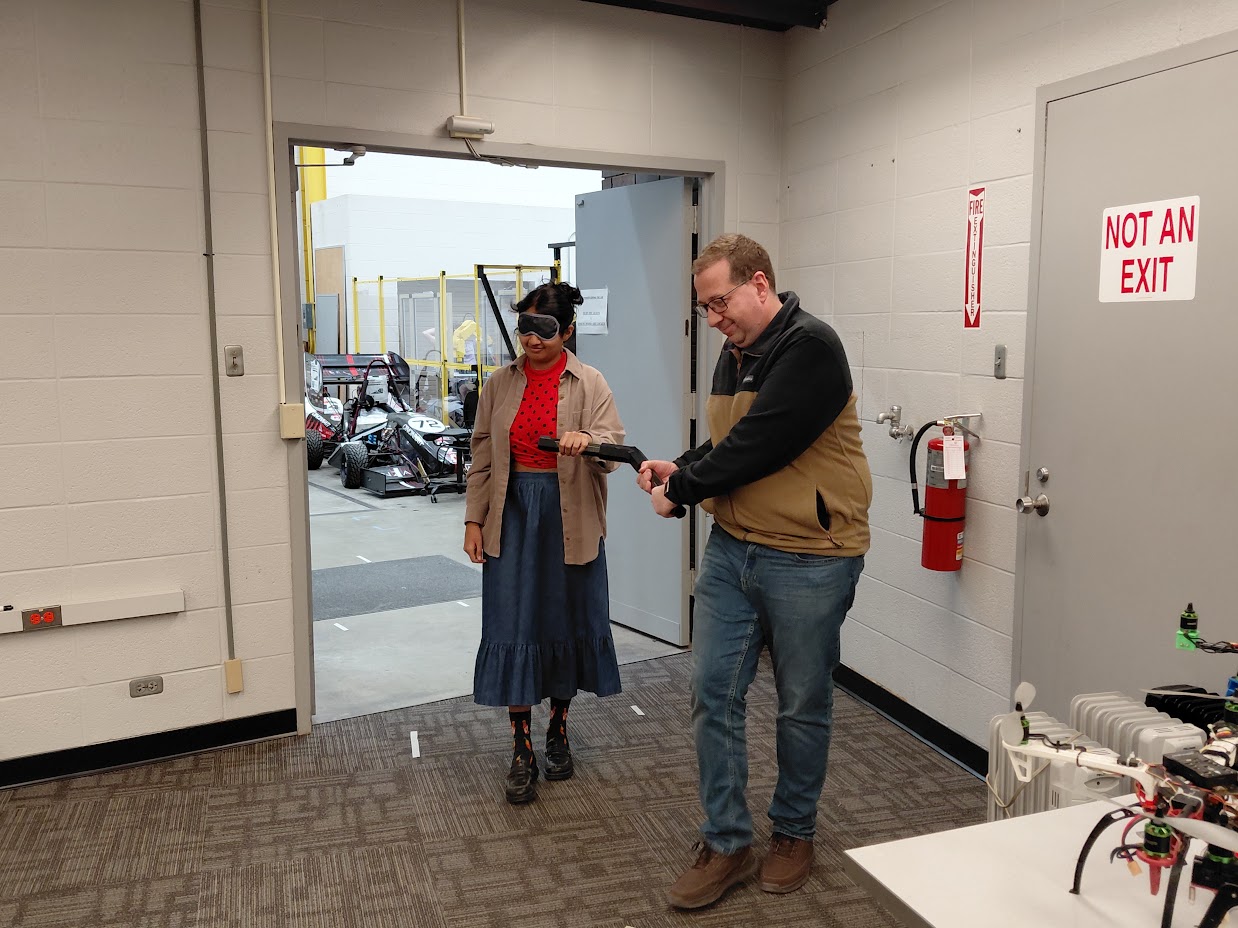
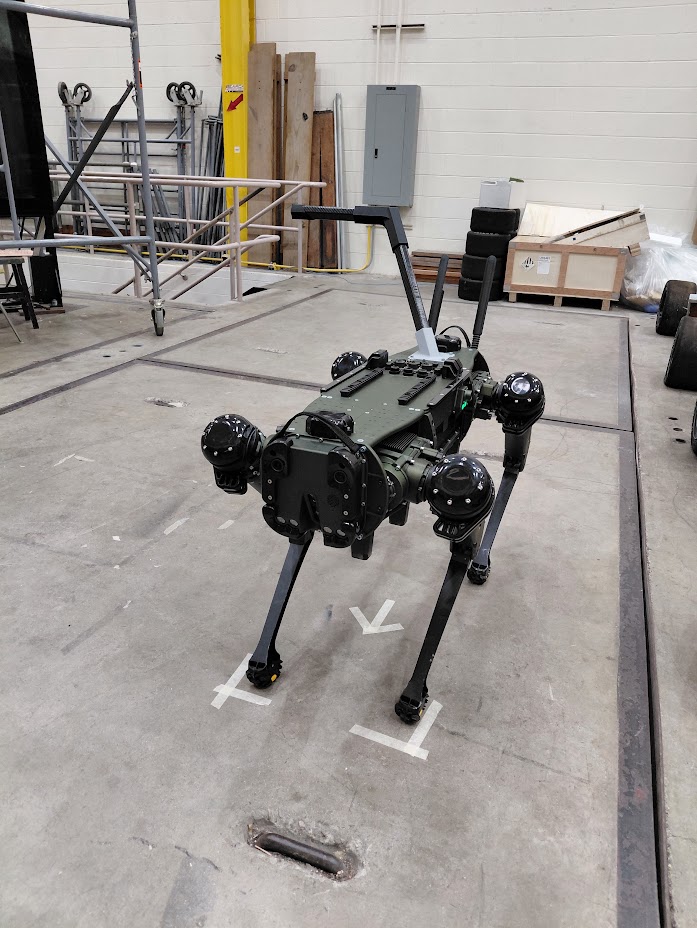
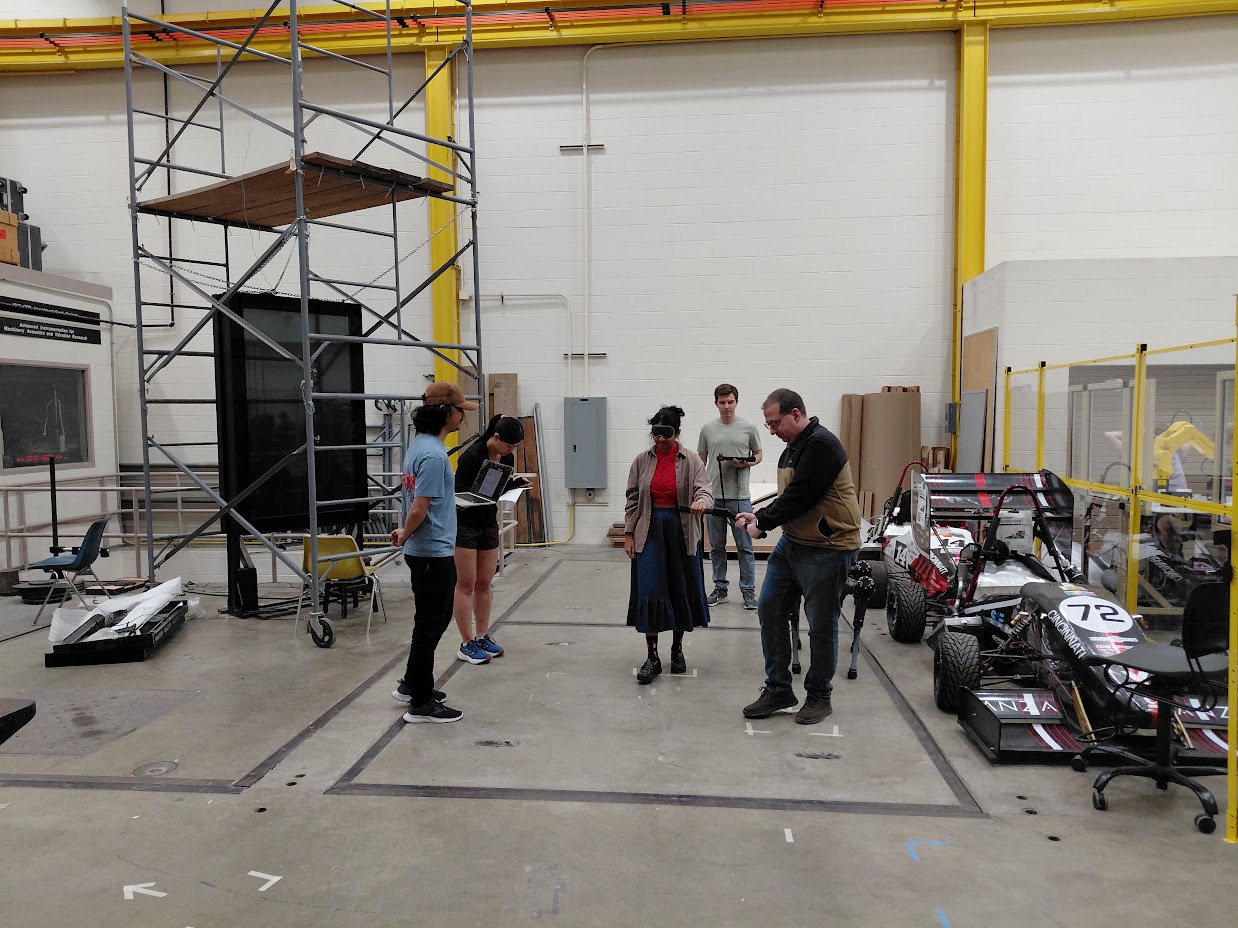
Blindfolded participants held a rigid handle and followed a marked route. We recorded completion time, survey responses, and observed behavior.
The robot was remotely controlled so the study measured the guidance experience—not autonomous navigation.
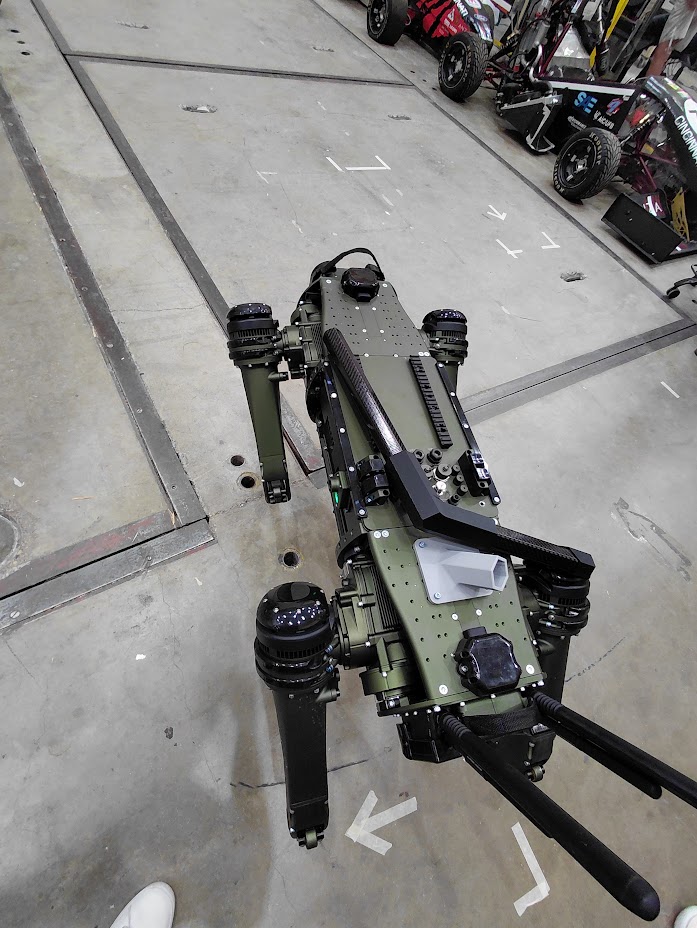
Designing for the human side of Human–Robot Interaction.
I was the only design student on the interdisciplinary team, focusing on how participants perceived, interpreted, and responded to the robotic system.
- 01Contributed to experiment planning
- 02Helped design the participant survey
- 03Observed hesitation, posture, comfort, and interaction behavior
- 04Conducted post-trial participant surveys
- 05Contributed to interaction analysis, interpretation, and research documentation
I focused on how movement, sound, timing, and physical behavior shaped the experience—not only task completion.
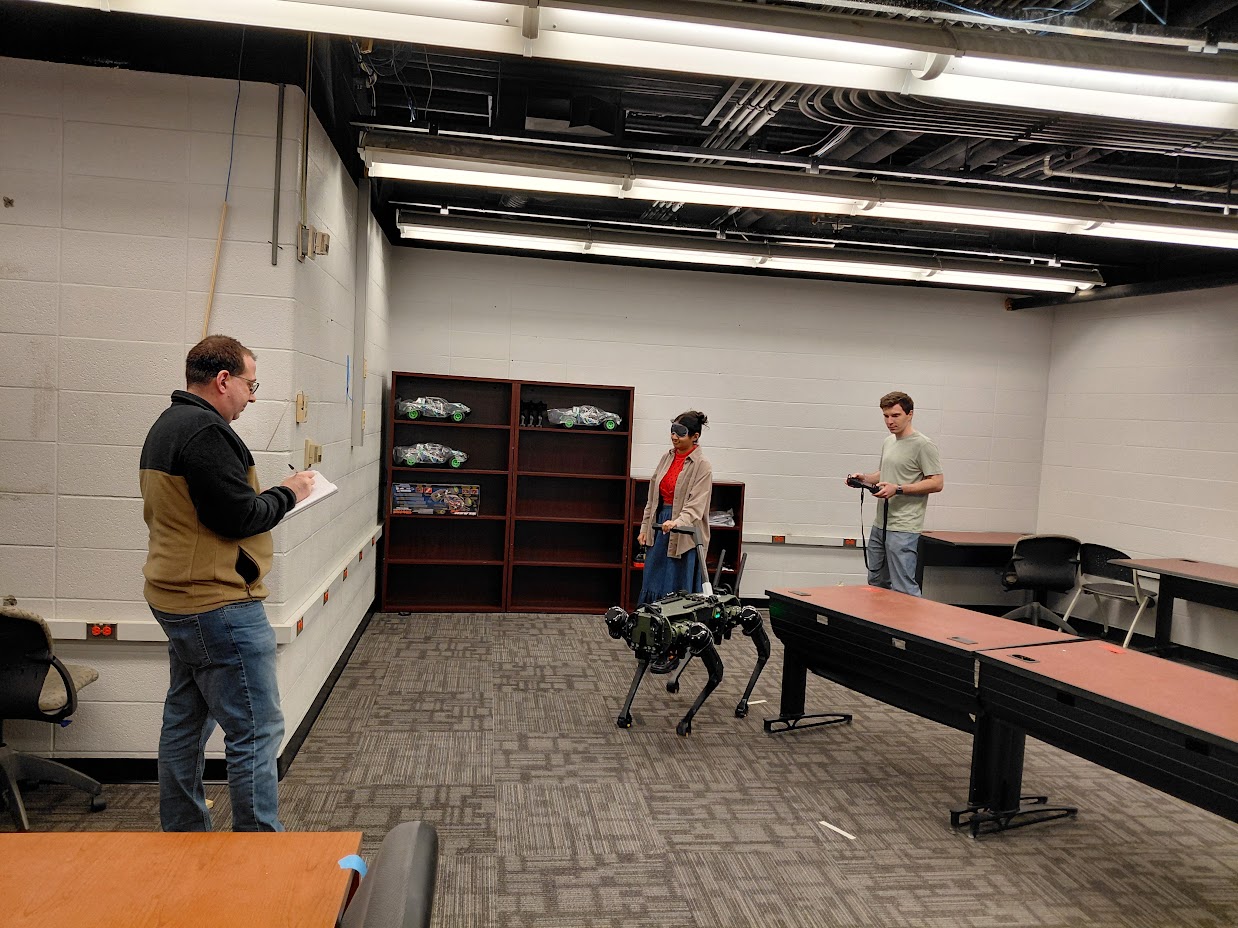
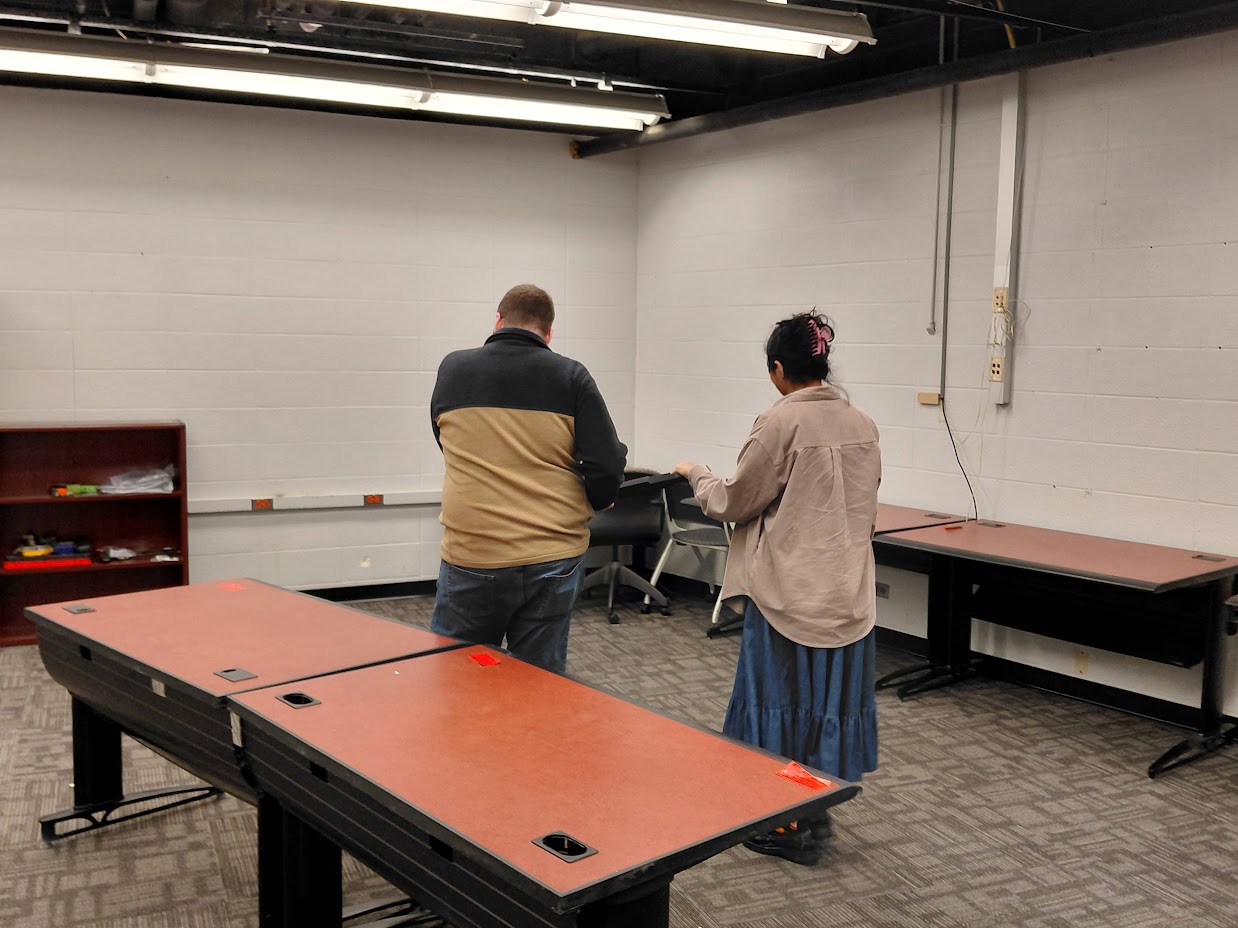
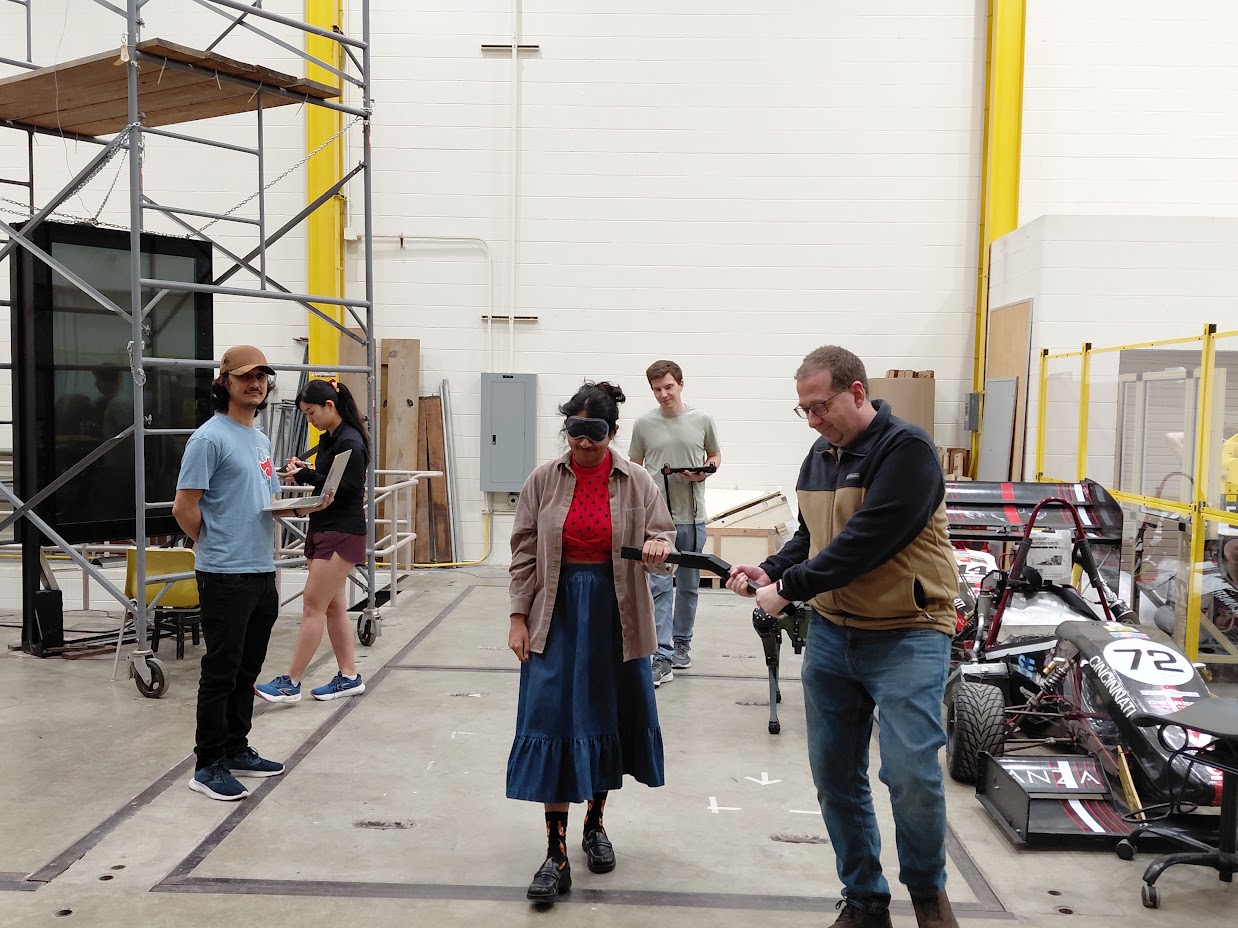
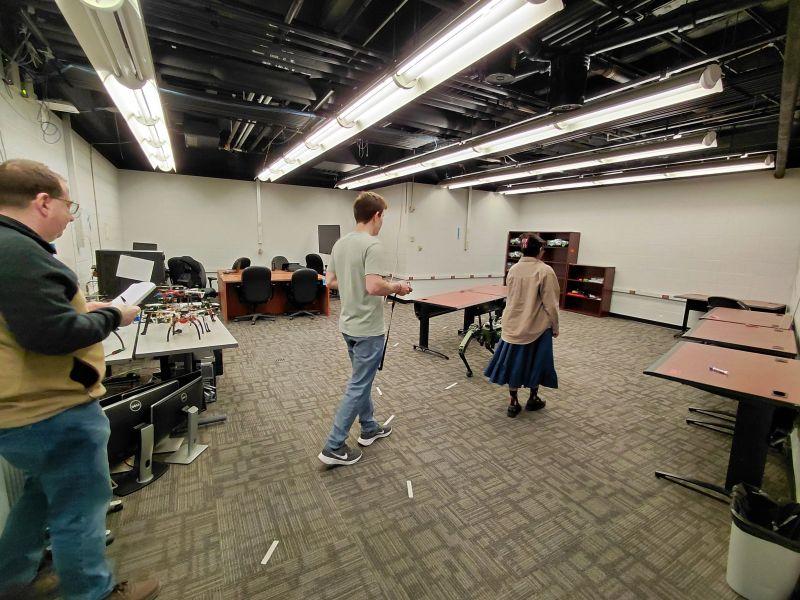
What participants said + what participants did.
Trust & Comfort
- Comfort
- Safety
- Confidence
Interaction & Predictability
- Ease of following
- Anticipating movement
- Tactile feedback
Multimodal Feedback
- Sound
- Physical feedback
- Predictability
- Feeling in control
We also measured task completion time and observed behavioral indicators such as hesitation, smaller steps, slower movement, rigid posture, and physical tension. Each session began with informed consent and ended with a structured post-trial survey.
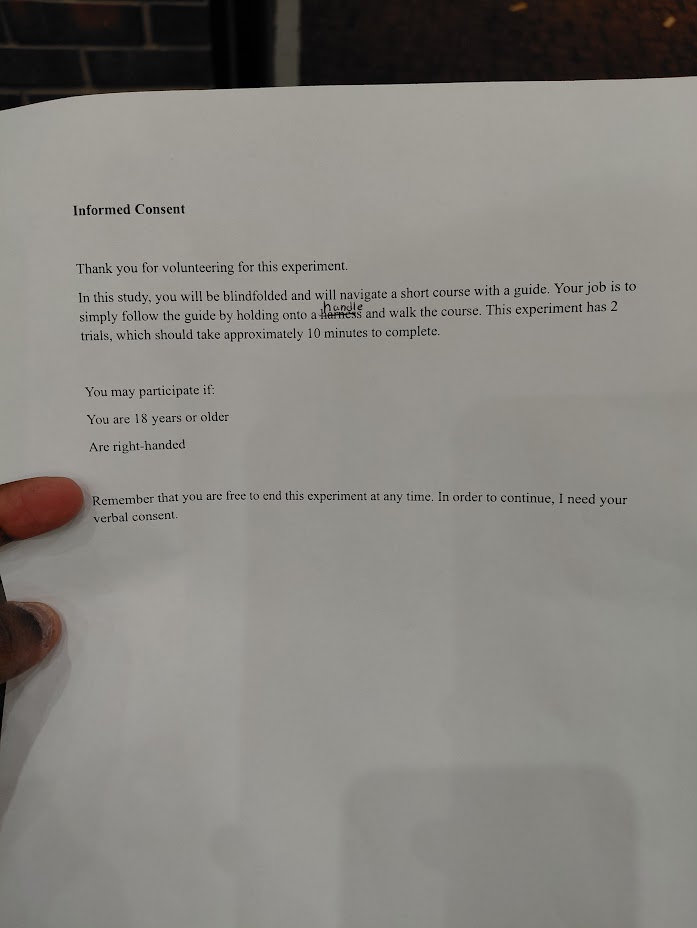
Reported comfort was surprisingly comparable.
Contrary to our expectation, final comfort ratings were identical and ease-of-following ratings were similar.
Reported comfort did not show the disadvantage we expected for robotic guidance.
Reported experience and observed behavior.
Reported comfort was comparable, but robot-guided movement showed more hesitation and took longer.
Participants reported relatively comparable comfort across the human and robot conditions.
- Smaller steps
- More cautious movement
- Physical tension
- Initial hesitation
Self-reported comfort and observed behavior did not always tell the same story.
Mechanical noise became an interface.
Sound interpretation averaged 4.18/5 with the robot and 1.55/5 with the human guide.
This does not prove the robot performed better. Its mechanical noise simply added an auditory reference for movement.
Every perceivable behavior of an embodied system can become part of its interface.
What this experiment taught us about human–robot guidance.
Participants could report similar comfort while their movement still showed greater hesitation during robotic guidance.
People need to understand what a robotic guide is doing and what it is likely to do next. Predictability was rated as highly important in both conditions.
Sound, movement, resistance, timing, and haptics can communicate system behavior even without a screen.
Designing trust beyond screens.
This study expanded how I think about interfaces.
In embodied HRI, movement, sound, resistance, rhythm, and predictability all communicate system behavior.
It also reinforced the need to compare self-report with observed behavior.
The same human-factors questions apply to automated and shared-control mobility systems:
- What is the system doing?
- What will it do next?
- Do I understand its intent?
- When should I rely on it or intervene?
These questions connect the HRI findings to broader areas such as: