2027+ Mobility Trend Analysis
A foresight study for DSGN7021 Design Strategy — mapping where in-vehicle interfaces are heading, and what it means for Ford.
Three rounds of research
I scanned mobility innovations, grouped evidence from academic and industry sources, and curated support for each theme.
The process combined secondary research, forecasting, backcasting, and trend manifestations.
Scanned credible articles and papers on emerging mobility technology.
Grouped evidence into recurring themes.
Selected two trends for their emerging relevance and practical impact.
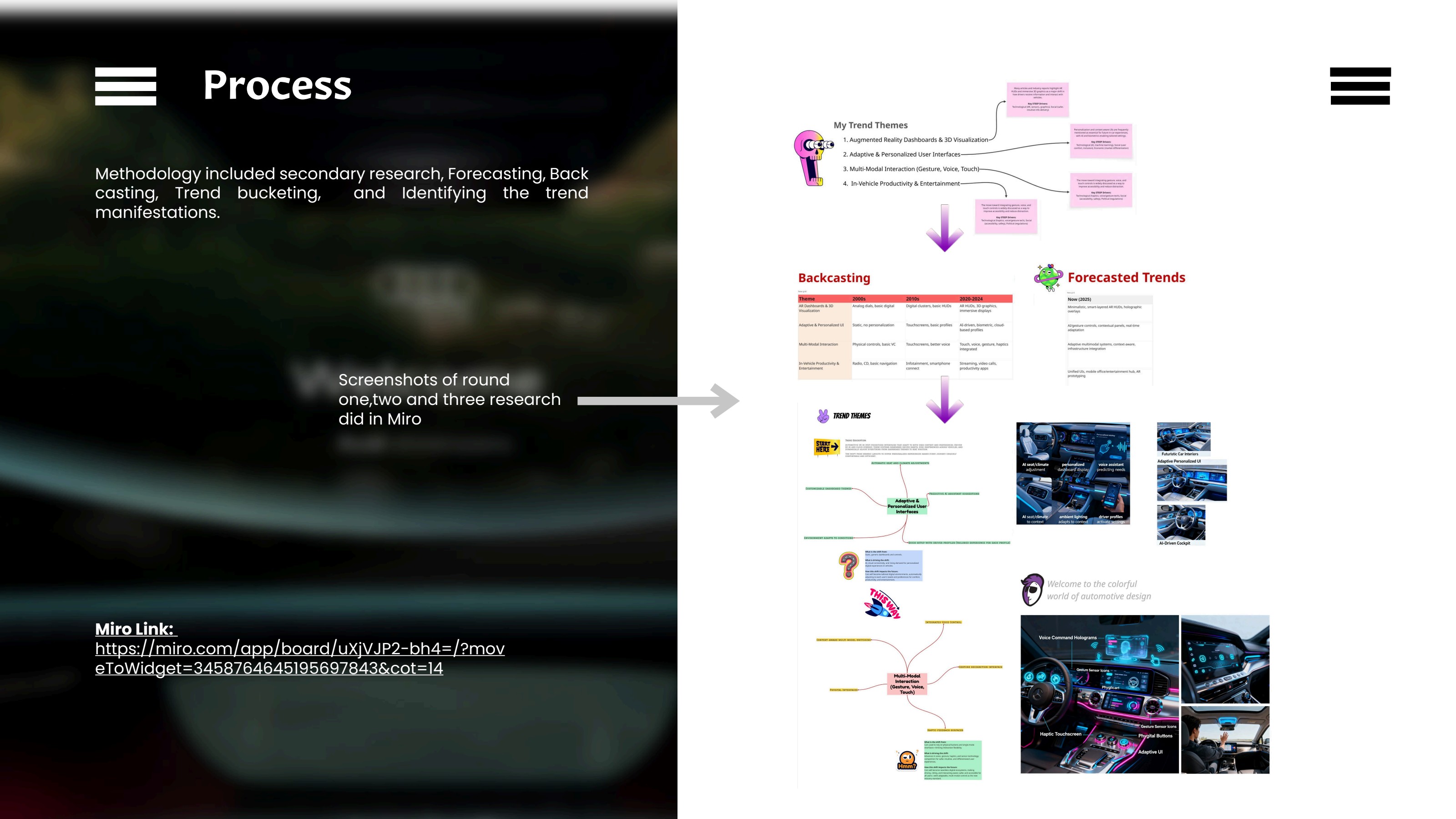
Rounds one, two and three of research, mapped in Miro
Four themes, backcast from the 2000s to now.
| Theme | 2000s | 2010s | 2020–2024 | Now (2025) |
|---|---|---|---|---|
| AR Dashboards & 3D Visualization | Analog dials, basic digital | Digital clusters, basic HUDs | AR HUDs, 3D graphics, immersive displays | Minimalistic, smart-layered AR HUDs, holographic overlays |
| Adaptive & Personalized UI | Static, no personalization | Touchscreens, basic profiles | AI-driven, biometric, cloud-based profiles | All-gesture controls, contextual panels, real-time adaptation |
| Multi-Modal Interaction | Physical controls, basic voice control | Touchscreens, better voice | Touch, voice, gesture, haptics integrated | Adaptive multimodal systems, context-aware, infrastructure integration |
| In-Vehicle Productivity & Entertainment | Radio, CD, basic navigation | Infotainment, smartphone connect | Streaming, video calls, productivity apps | Unified UIs, mobile office/entertainment hub, AR prototyping |
Immersive Reality Dashboards
Original: Augmented Reality Dashboards & 3D Visualization
AR dashboards and 3D visualization move essential, context-aware information into the driver's forward view. The trend shifts vehicle information from static clusters toward layered spatial displays.
Increasing focus on driver safety and reduction of cognitive overload.
Rapid growth of AR, AI, advanced sensors, and high-fidelity 3D rendering engines.
Demand for premium digital experiences in mobility and new revenue streams through software integration.
Safer, more efficient navigation reducing emissions from route inefficiencies and accidents.
Stronger safety regulations encouraging advanced driver-assistance and visibility technologies.
From basic analog and digital dashboards to immersive AR and 3D visualizations.
Advances in AR, sensors, and user demand for safer, more engaging displays.
Drivers get real-time, context-aware info with less distraction, making driving safer and more personalized.
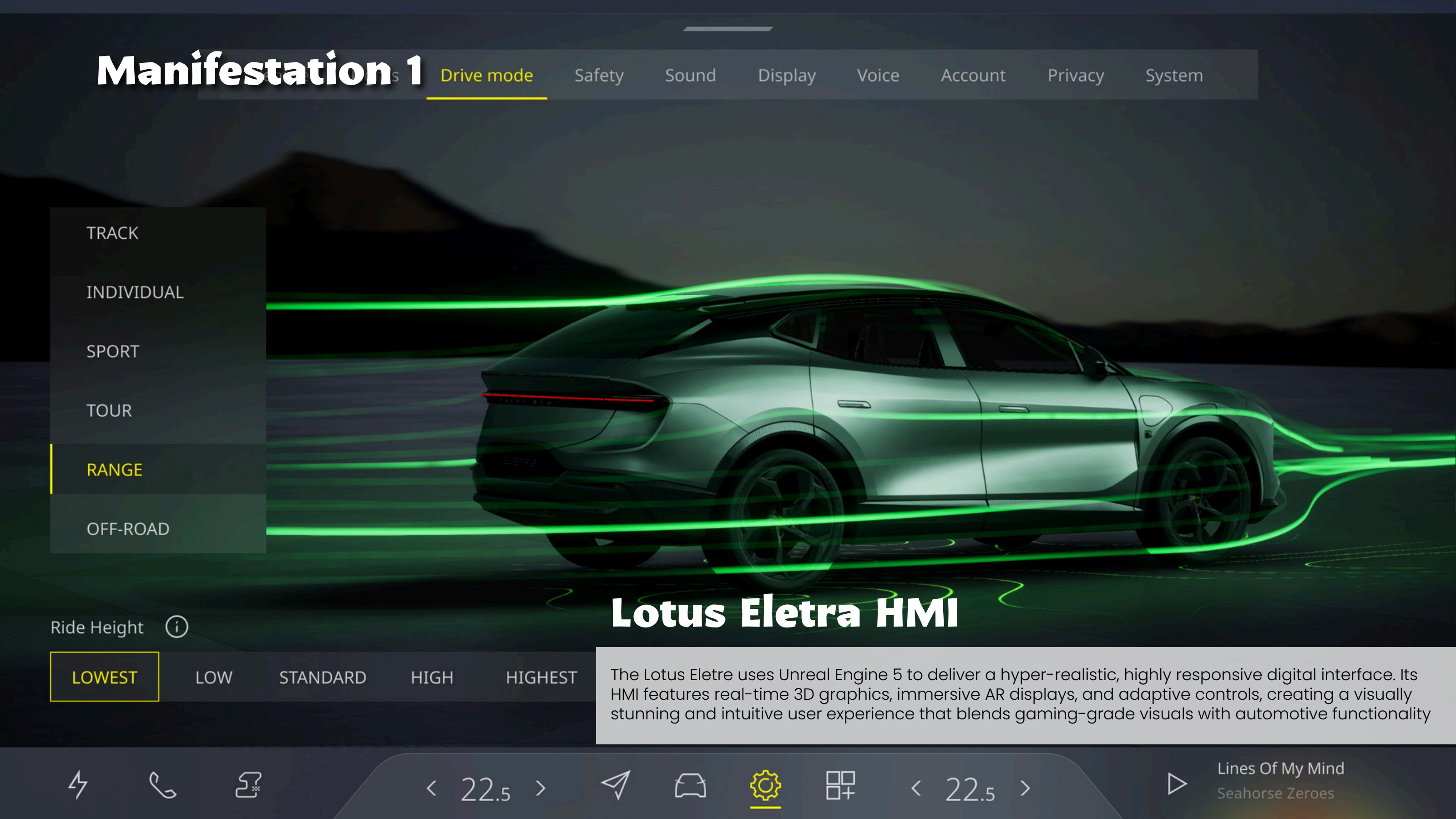
Lotus Eletre HMI
A production HMI built around layered digital visualization, recognized with two Red Dot Design Awards for its Hyper OS infotainment system.
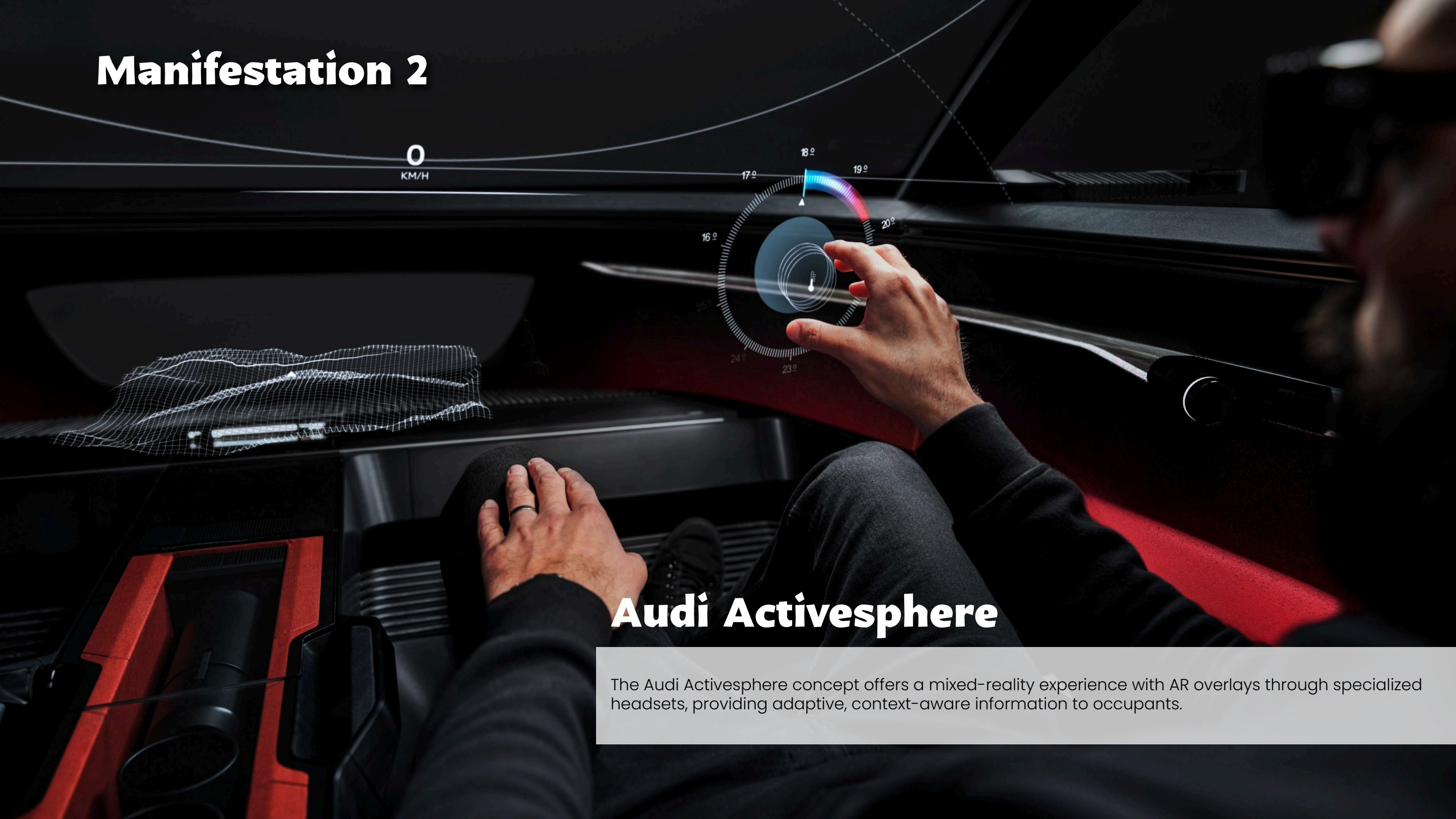
Audi Activesphere
The Audi Activesphere concept offers a mixed-reality experience with AR overlays through specialized headsets, providing adaptive, context-aware information to occupants.
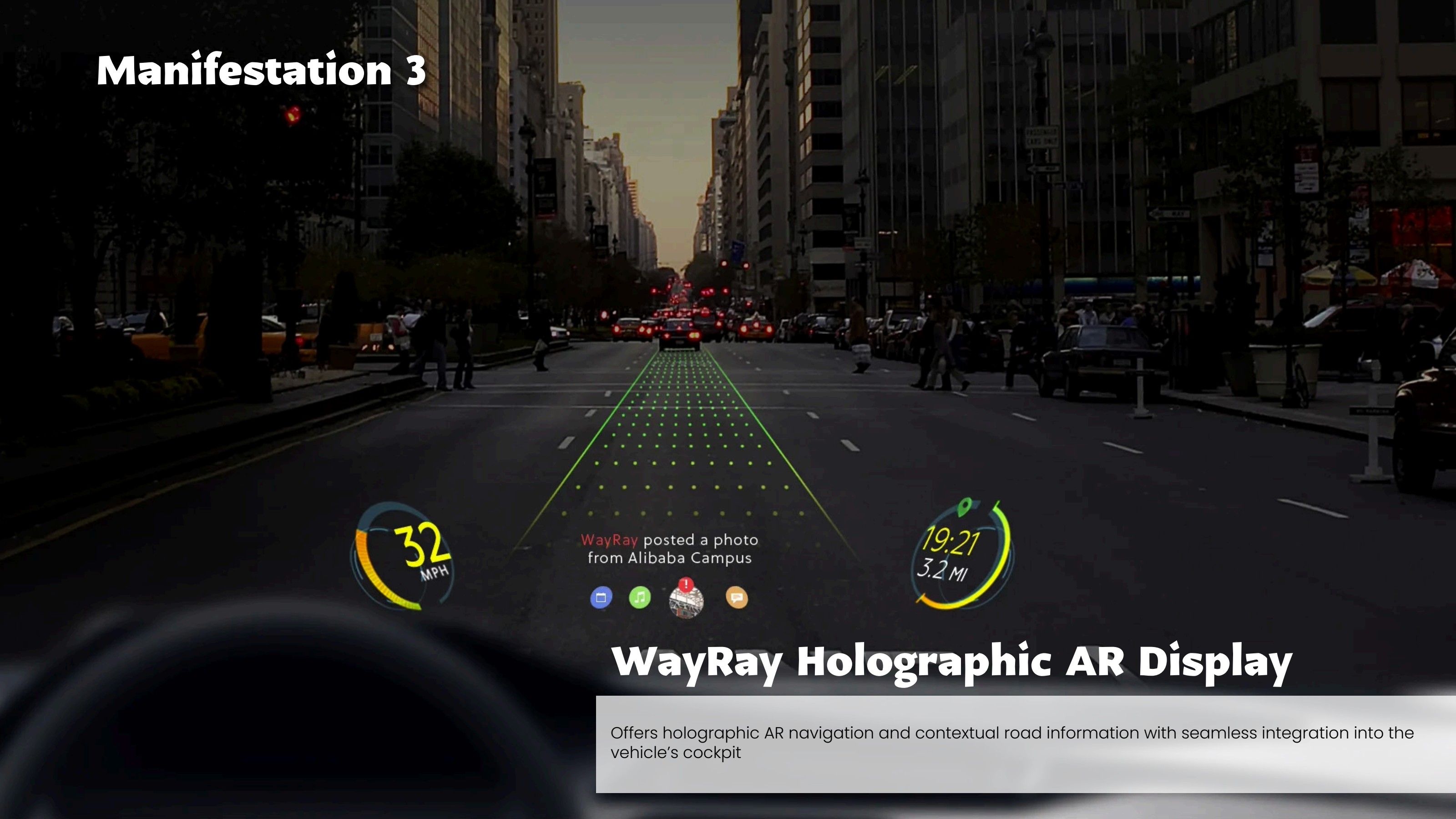
WayRay Holographic AR Display
Offers holographic AR navigation and contextual road information with seamless integration into the vehicle's cockpit.
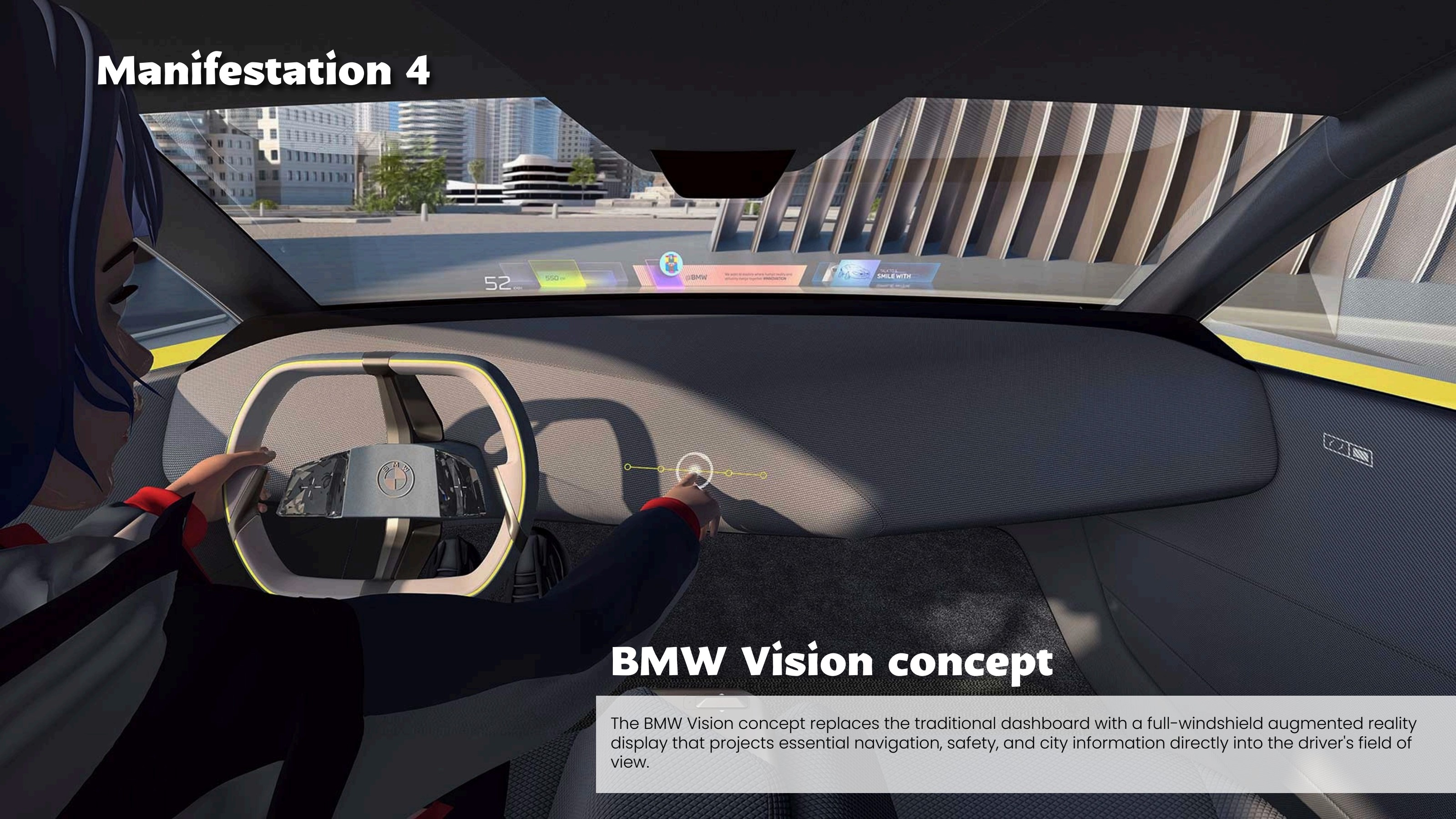
BMW Vision Concept
The BMW Vision concept replaces the traditional dashboard with a full-windshield augmented reality display that projects essential navigation, safety, and city information directly into the driver's field of view.
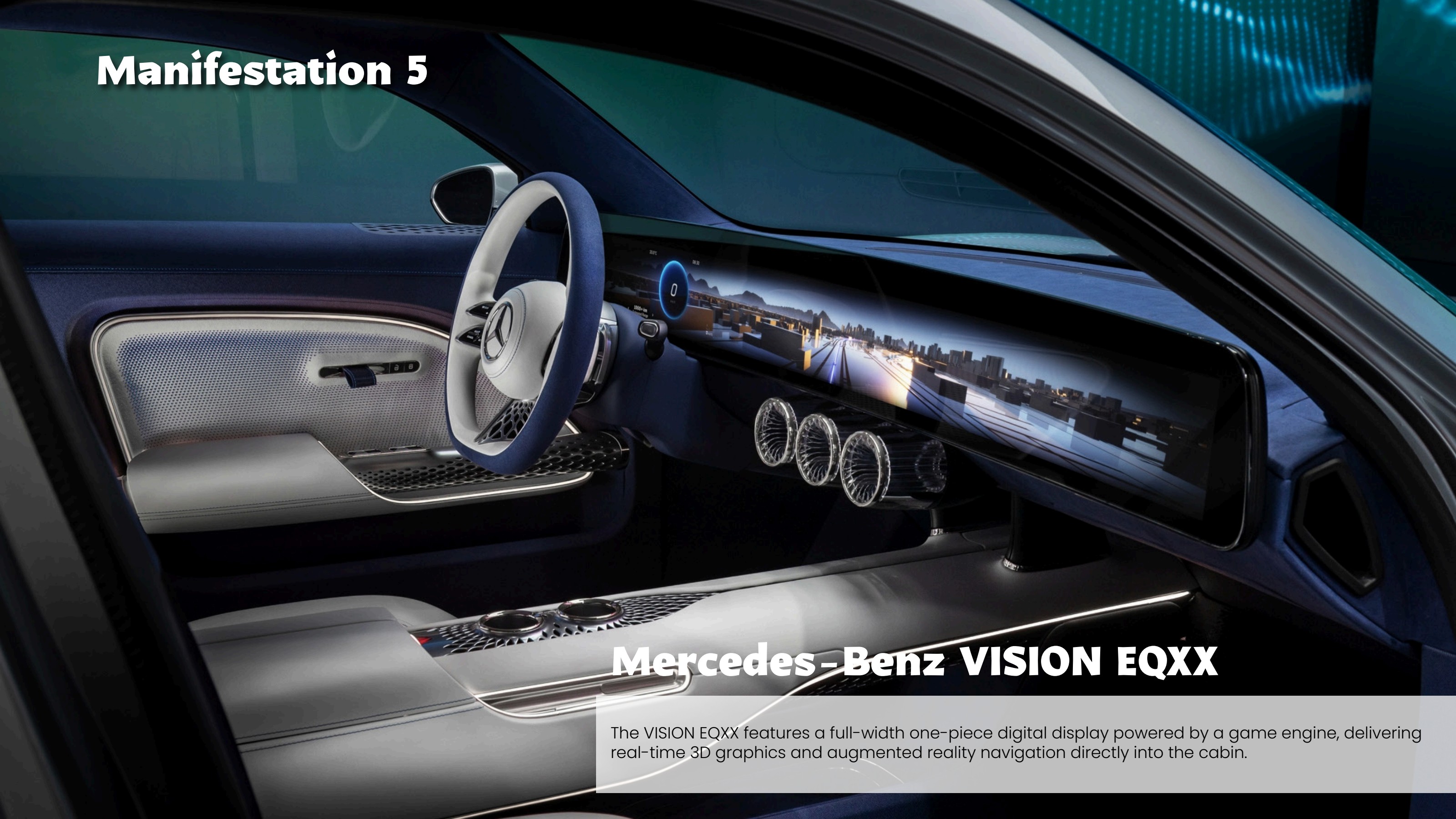
Mercedes-Benz VISION EQXX
The VISION EQXX features a full-width one-piece digital display powered by a game engine, delivering real-time 3D graphics and augmented reality navigation directly into the cabin.
These thought starters translate each trend into possible directions for Ford; they are concepts, not production proposals.
Integrate AR windshields that display navigation, hazards, and alerts directly in the driver's line of sight for safer driving.
Offer 3D visualization dashboards that adapt to different driving modes (commute, off-road, autonomous) for a personalized experience.
Use AR overlays for virtual maintenance guides, helping drivers and technicians with real-time, step-by-step service instructions.
Talk, Tap & Wave: The Tri-Modal Revolution
Original: Multi-Modal Interaction (Gesture, Voice, Touch)
Integrated gesture, voice, and touch offer flexible alternatives to single-mode controls.
Demand for safer, more accessible, and convenient driving experiences.
Growth in AI, sensor fusion, natural language processing, and haptic feedback.
Premium features drive differentiation and customer satisfaction; market growth in both luxury and mass-market segments.
Reduced distraction and improved safety can lower accident rates and emissions.
Regulations encourage hands-free, distraction-free interfaces and improved accessibility.
From single-mode controls (just buttons or touchscreens) to integrated systems that combine gesture, voice, and touch for more natural, flexible interaction.
Advances in sensors, AI, and user demand for safer, more convenient, and personalized vehicle experiences are pushing automakers to adopt multi-modal systems.
Drivers and passengers will interact with vehicles more intuitively and safely, reducing distraction and making cars more accessible to a wider range of users.
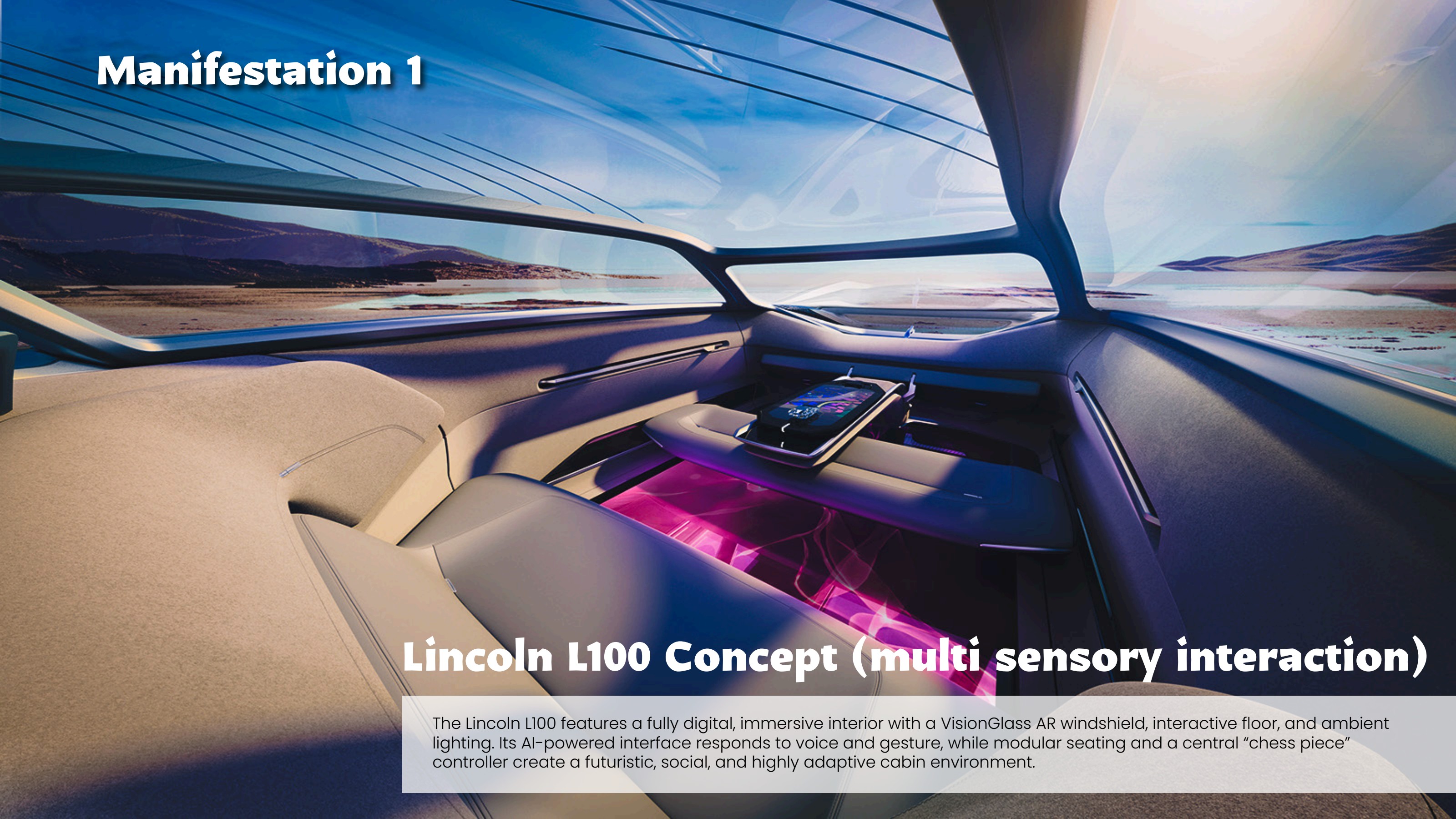
Lincoln L100 Concept
The Lincoln L100 features a fully digital, immersive interior with a VisionGlass AR windshield, interactive floor, and ambient lighting. Its AI-powered interface responds to voice and gesture, while modular seating and a central “chess piece” controller create a futuristic, social, and highly adaptive cabin environment.
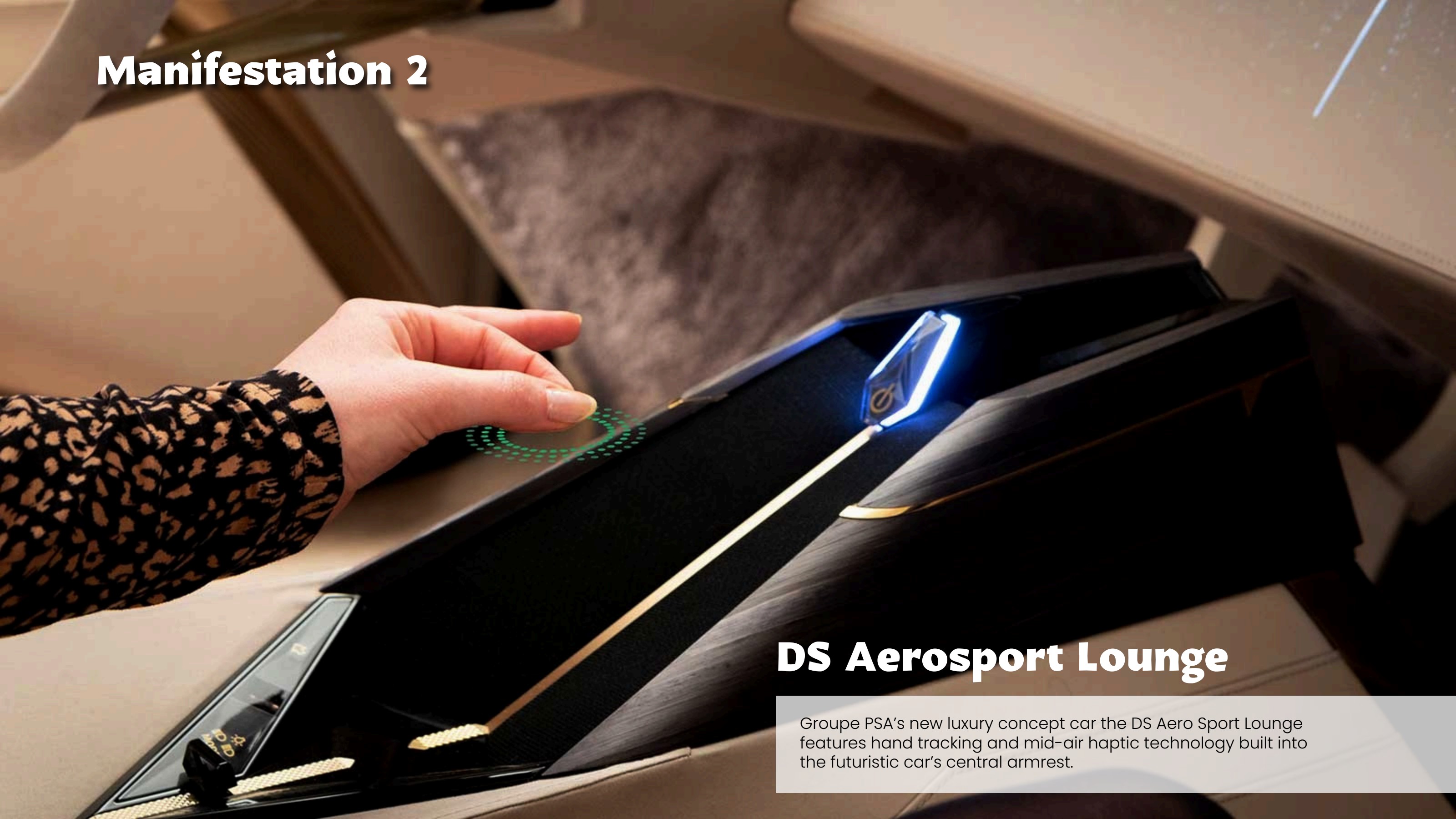
DS Aero Sport Lounge
Groupe PSA's new luxury concept car the DS Aero Sport Lounge features hand tracking and mid-air haptic technology built into the futuristic car's central armrest.
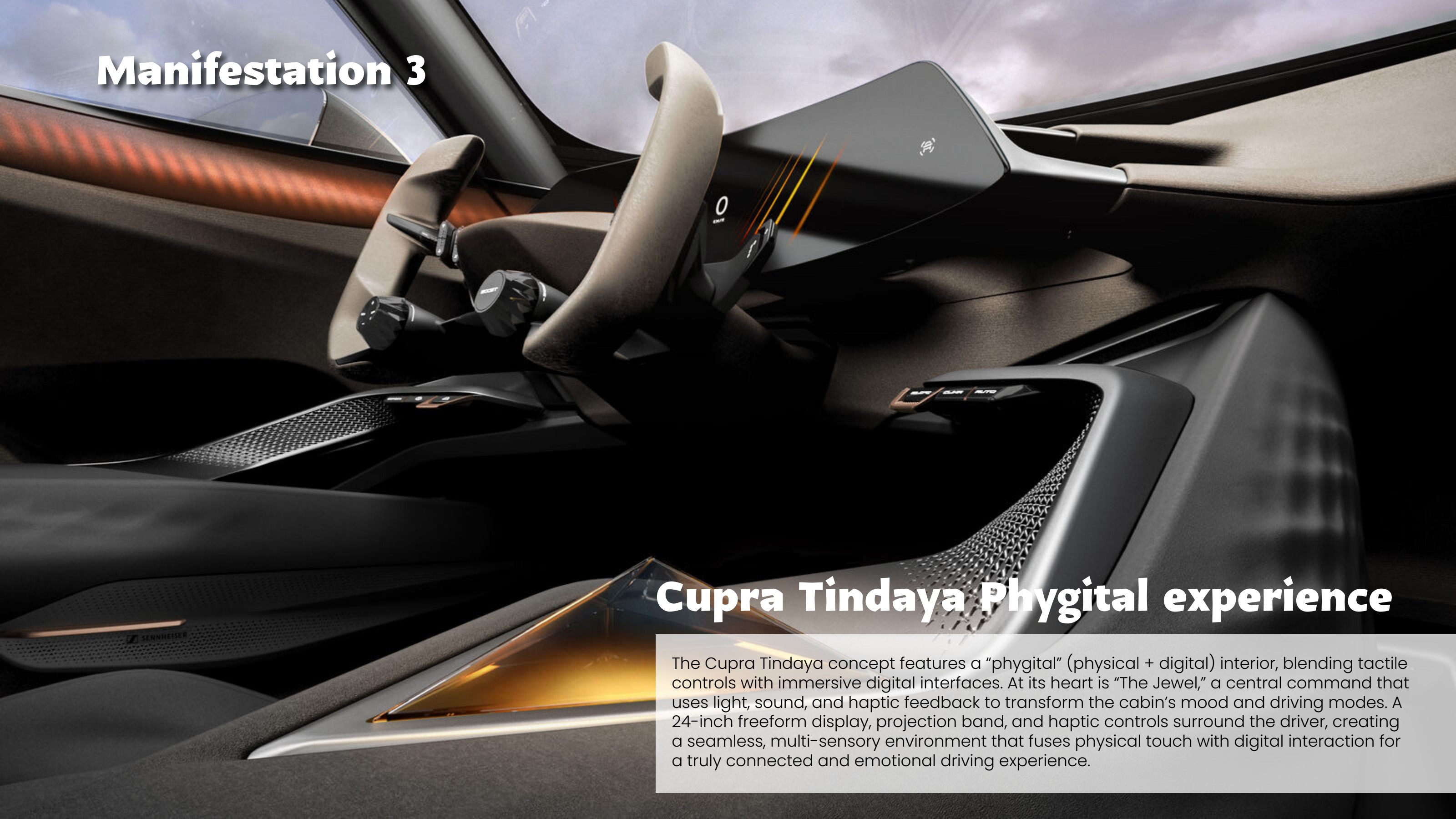
Cupra Tindaya Phygital Experience
The Cupra Tindaya concept features a “phygital” interior, blending tactile controls with immersive digital interfaces. At its heart is “The Jewel,” a central command that uses light, sound, and haptic feedback to transform the cabin's mood and driving modes. A 24-inch freeform display, projection band, and haptic controls surround the driver.
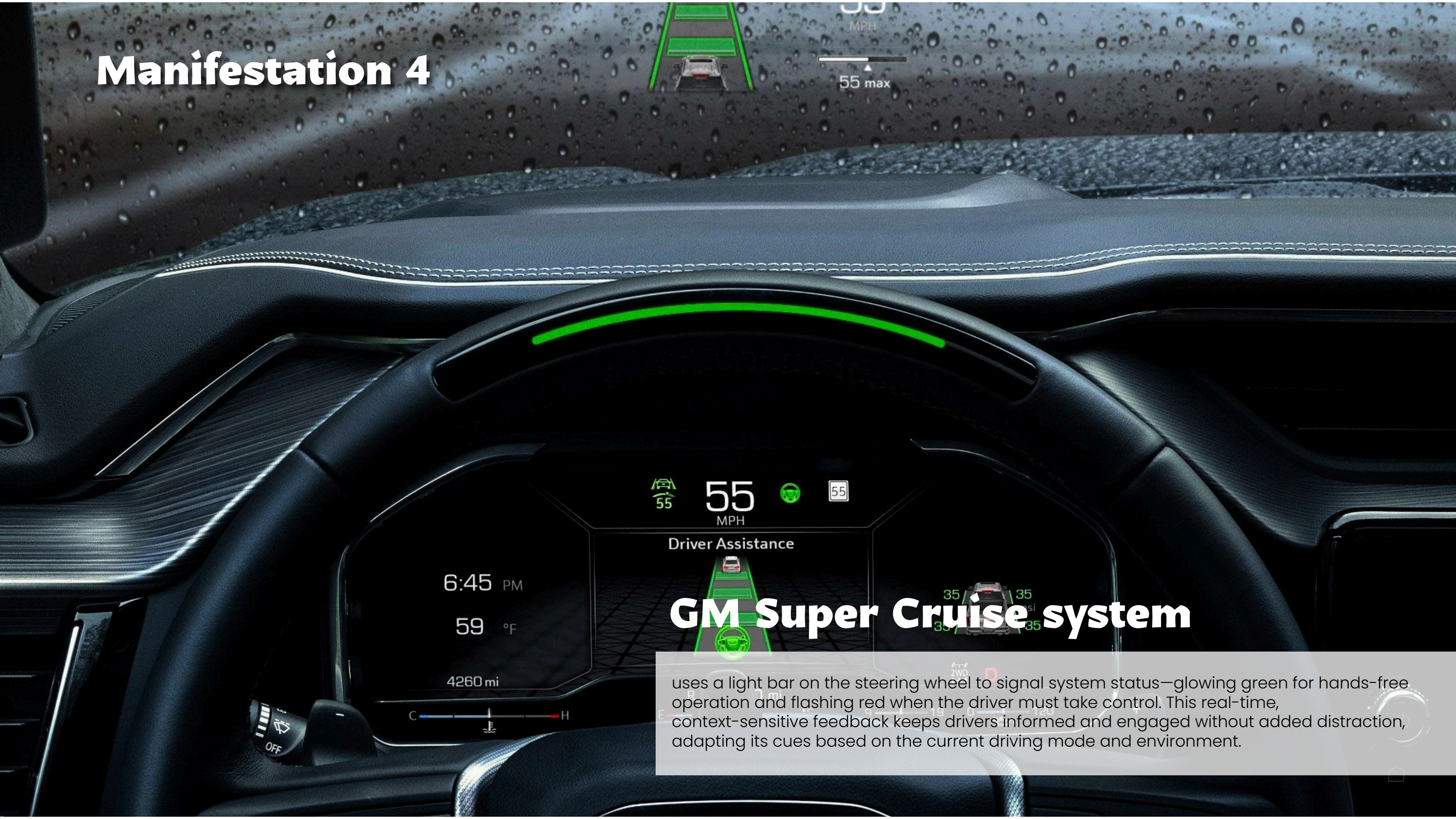
GM Super Cruise
Uses a light bar on the steering wheel to signal system status — glowing green for hands-free operation and flashing red when the driver must take control. This real-time, context-sensitive feedback keeps drivers informed and engaged without added distraction.
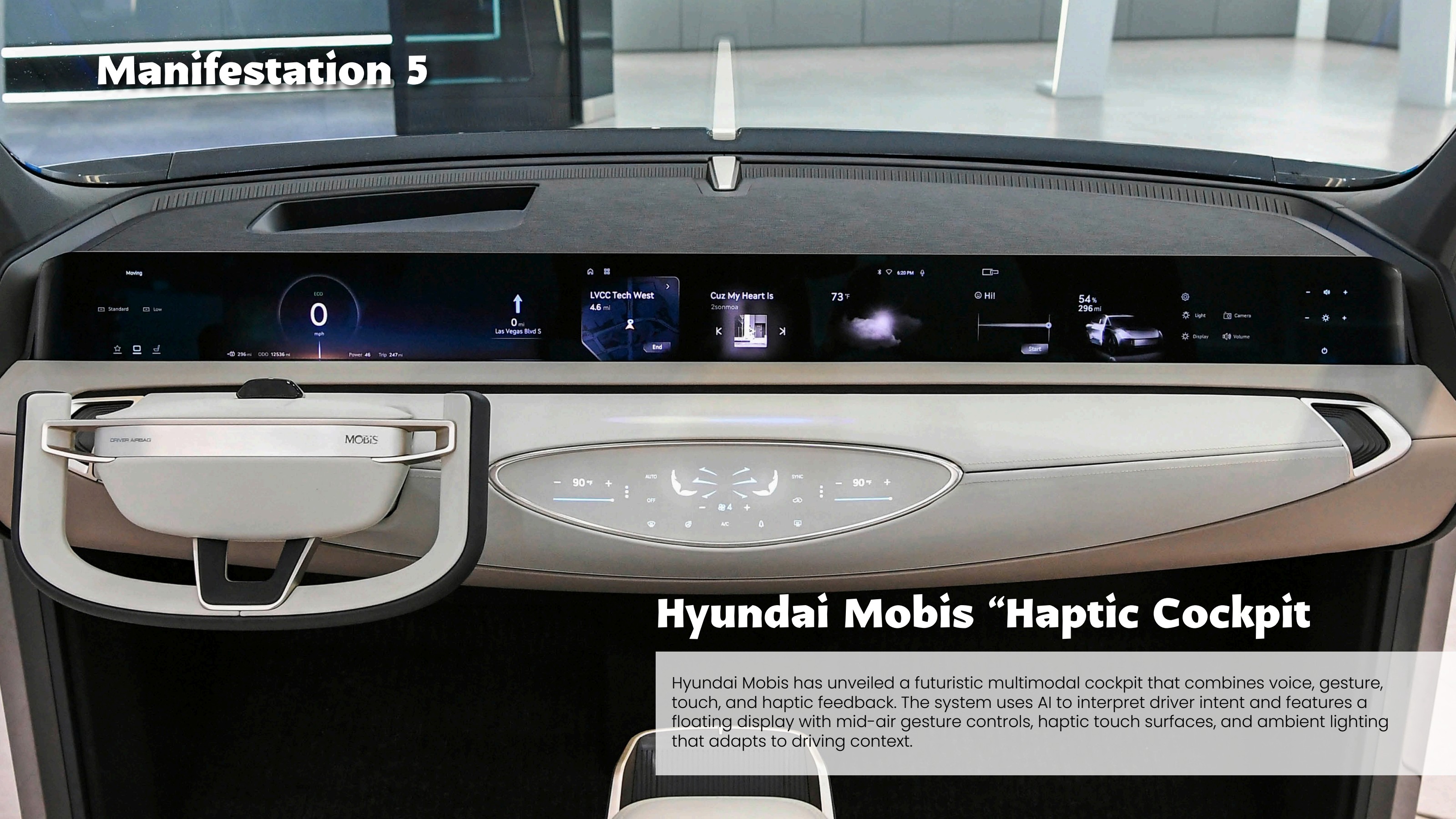
Hyundai Mobis “Haptic Cockpit”
Hyundai Mobis unveiled a futuristic multimodal cockpit that combines voice, gesture, touch, and haptic feedback. The system uses AI to interpret driver intent and features a floating display with mid-air gesture controls, haptic touch surfaces, and ambient lighting that adapts to driving context.
These thought starters translate each trend into possible directions for Ford; they are concepts, not production proposals.
Ford could introduce gesture and voice controls in commercial vehicles, allowing drivers to operate navigation and communication systems without taking their hands off the wheel.
Develop multi-modal interfaces in Ford SUVs and minivans that adapt to different users, including children and people with disabilities, for safer and more inclusive travel.
Use AI to learn driver preferences and automatically adjust multi-modal controls, creating a customized, intuitive experience for every Ford owner.
- Audi AG. (2023). The Audi Activesphere Concept. Audi MediaCenter. Source
- BMW Group. (2025). New BMW Panoramic iDrive revolutionises vehicle operation. BMW Group PressClub. Source
- Lotus Cars. (2024). Lotus wins two Red Dot Design Awards for its Hyper OS infotainment system. Source
- Mercedes-Benz Group. (2024). VISION EQXX — Game engine elevates user-interface graphics to a new level of digital luxury. Source
- WayRay AG. (n.d.). Press Area — Karma Automotive and WayRay AR HUD technology. Source
- Pritchard, T. (2025). Car HUDs are bad. Jaguar Land Rover is testing tech to change that. WIRED. Source
- General Motors. (2025). Super Cruise 101: All you need to know about GM's hands-free driving. Source
- Hyundai Mobis. (2024). Hyundai Mobis unveils future of in-vehicle display with moving panoramic screens. Source
- Ultraleap. (2024). Designing for automotive HMI — DS Aero Sport Lounge case study. Source
- CUPRA. (2025). CUPRA Tindaya showcar debuts at IAA Mobility 2025. Source
- Car Design News. (2024). The world is getting phygital, and so is car design. Source