Takeover UX
Safety-Critical Interaction Design for L2/L3 Vehicles.
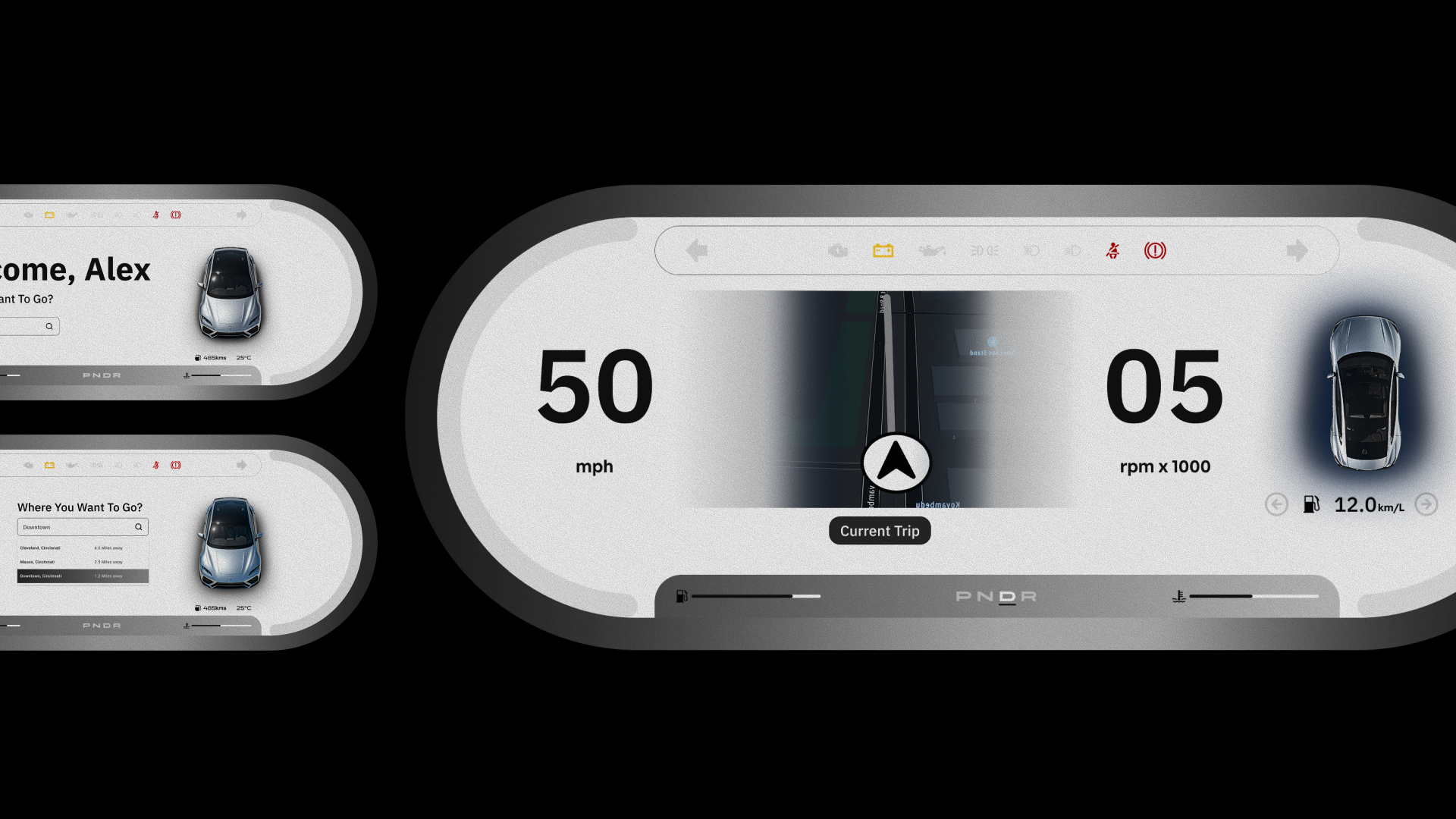
The handover, in motion.
A continuous transition from automated driving to driver control.
When the car
needs you back.
When an automated vehicle reaches its limits, a disengaged driver may have only seconds to respond. Poorly designed alerts can cause delayed reaction time, panic or confusion, and loss of trust in automation.
How might we support drivers in understanding when, why, and how to take control under time-critical conditions — without overwhelming them?
- 01Enable fast and confident takeover
- 02Reduce cognitive overload during stress
- 03Communicate urgency clearly and progressively
- 01Time-critical scenarios (seconds matter)
- 02High-risk environment
A driver, a moment.
Driver using a partially or conditionally automated vehicle (L2/L3).
- ·Driver may be relaxed, distracted, or monitoring passively
- ·Sudden environmental uncertainty (construction, weather, lane loss)
The vehicle detects a situation it cannot handle and requests the driver to take over control safely and in time.
From signal to system.
Scenario-based user survey.
A nine-participant scenario survey informed this early design direction. The interface remains a hypothesis that needs simulator testing.
Because real takeover events are rare, nine participants responded to a scenario-based survey about expectations, concerns, alerts, and information needs. This was exploratory research—not usability testing or a controlled evaluation.
Participants had varied driving habits; 56% drove daily or almost daily, and 78% had limited or no automated-vehicle experience. Their responses exposed expectations and trust gaps among unfamiliar users.
Early & Multimodal Alerts Are Essential
Visual + Audio + Haptic. Reduces missed alerts and supports divided attention.
Transparency Builds Trust
Users want to know why takeover is needed. Context reduces hesitation and doubt.
Clear Action Guidance Matters
Unclear actions increase stress. Users prefer narrowed, directive guidance.
Preference for Gradual & Slow Alerts
Strong preference for early warnings. Time to mentally prepare matters.
Meet Alex.
“I'm okay taking control… but don't surprise me or leave me guessing.”
A driver who accepts automation but becomes anxious when a sudden takeover request lacks context, time, or clear action.
- +Retain control quickly and safely
- +Avoid panic during takeover
- +Understand why (context) is required
- +Feel confident once control is transferred
- ·Early or gradual takeover alerts
- ·Clear explanation of the takeover request
- ·Simple, increased action guidance
- ·Confirmation of manual control
- −Anxiety caused by uncertainty
- −Increased cognitive load under time pressure
- −Hesitation due to multiple possible actions
- −Loss of focus when system behavior fails
- −Sudden, alarming takeover alerts
- −No context for why takeover is happening
- −Vague instructions like "Brake or steer as soon as you see alert"
Six rules for a calm handover.
Progressive urgency over sudden alerts
Supports emotional readiness under stress.
Clarity over completeness
Reduce cognitive load during takeover.
One dominant action at a time
Prevent hesitation and decision paralysis.
Multi-modal communication for redundancy
Ensure alerts are noticed across attention states.
Close the loop after control transfer
Reinforce trust and perceived safety.
Fail-safe design
Design for edge cases to ensure additional safety & user trust.
A multimodal, phased takeover.
A phased sequence prepares the driver, escalates urgency, and confirms control transfer.
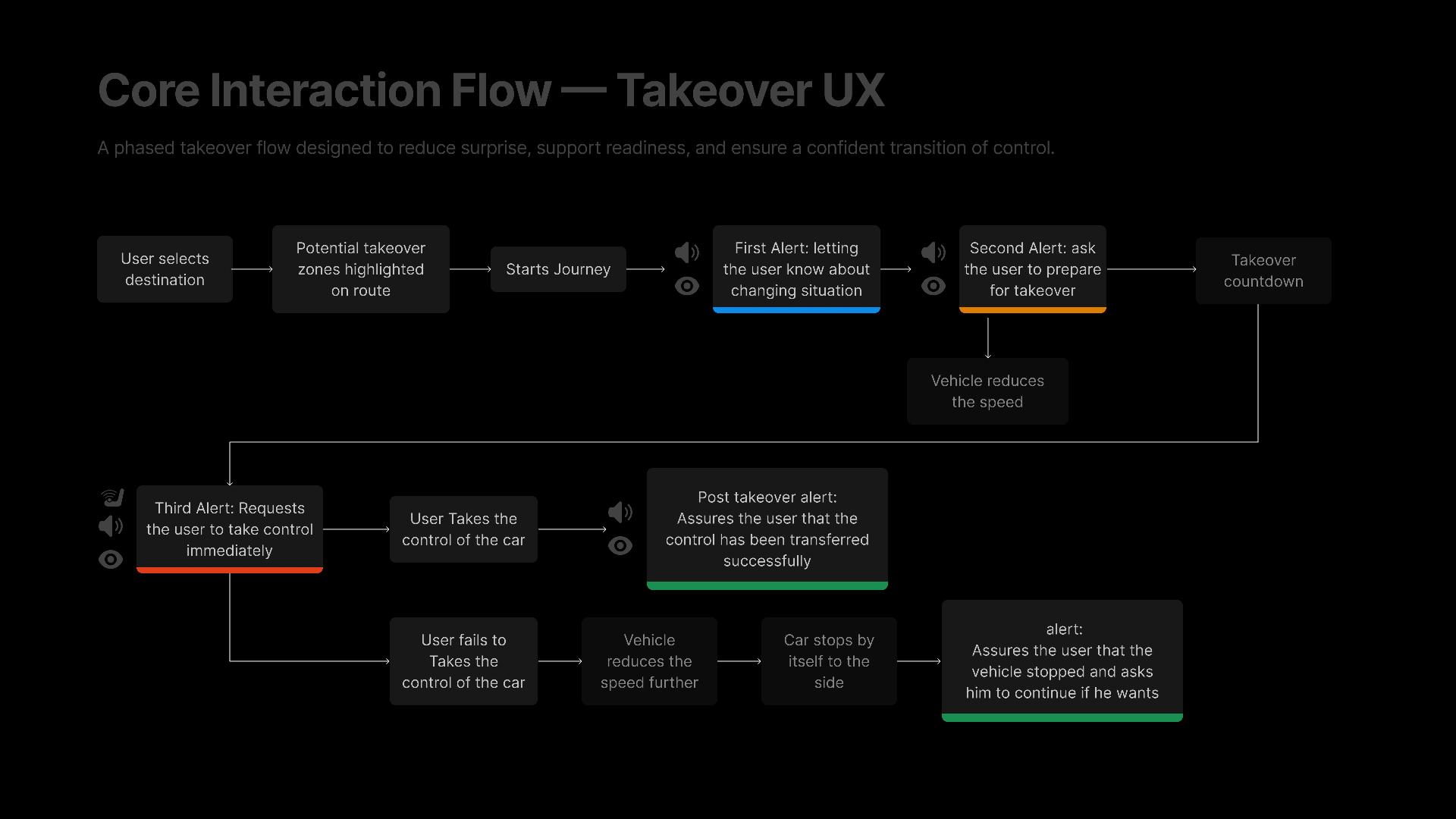
Low vehicle engagement
System detects driver disengagement.
Initial warning
Visual + Audio cue. Gentle reminder.
Takeover request
Escalating urgency.
Driver response
Driver takes control.
Confirmation
System confirms successful takeover.
Post-takeover support
Reassurance and feedback.
Exploring six concepts, refining one direction.
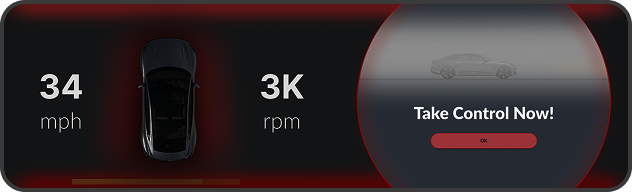
Vertical Alert
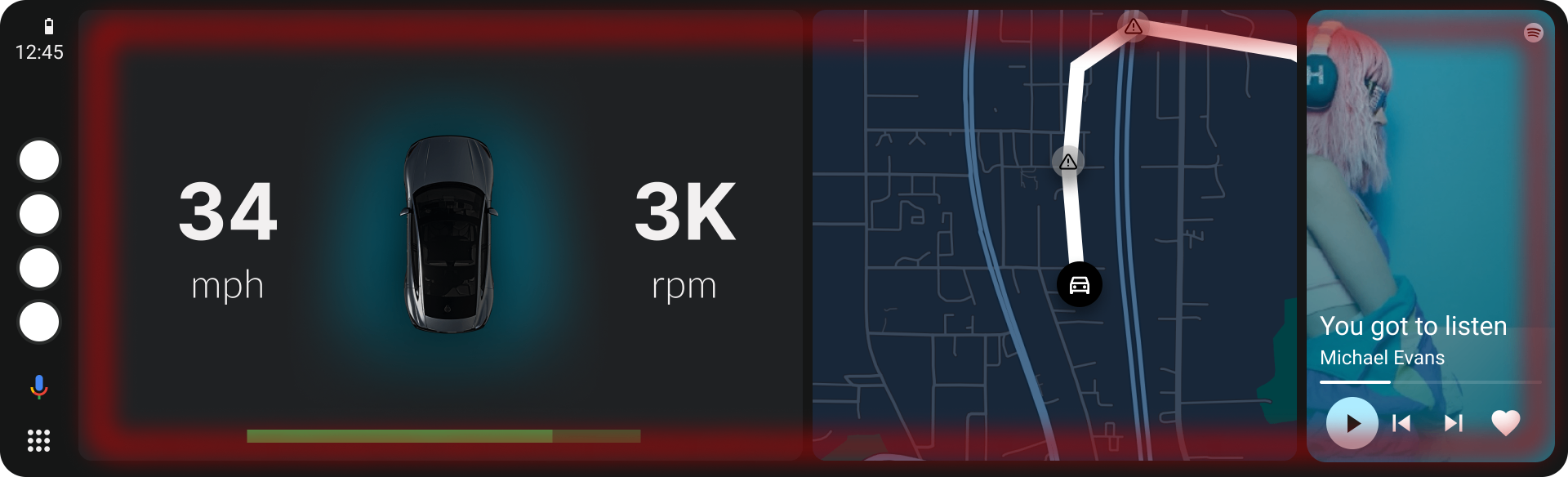
Alert on Vehicle Capsule
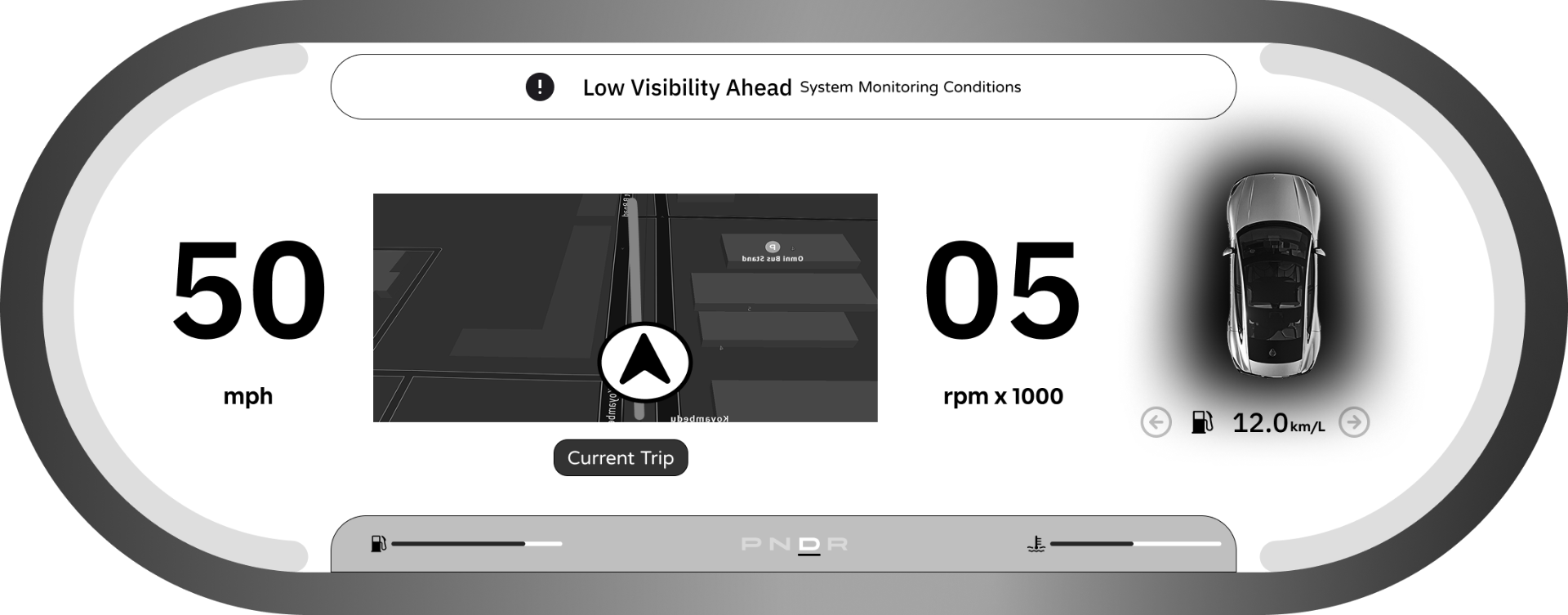
Horizontal Alert Banner
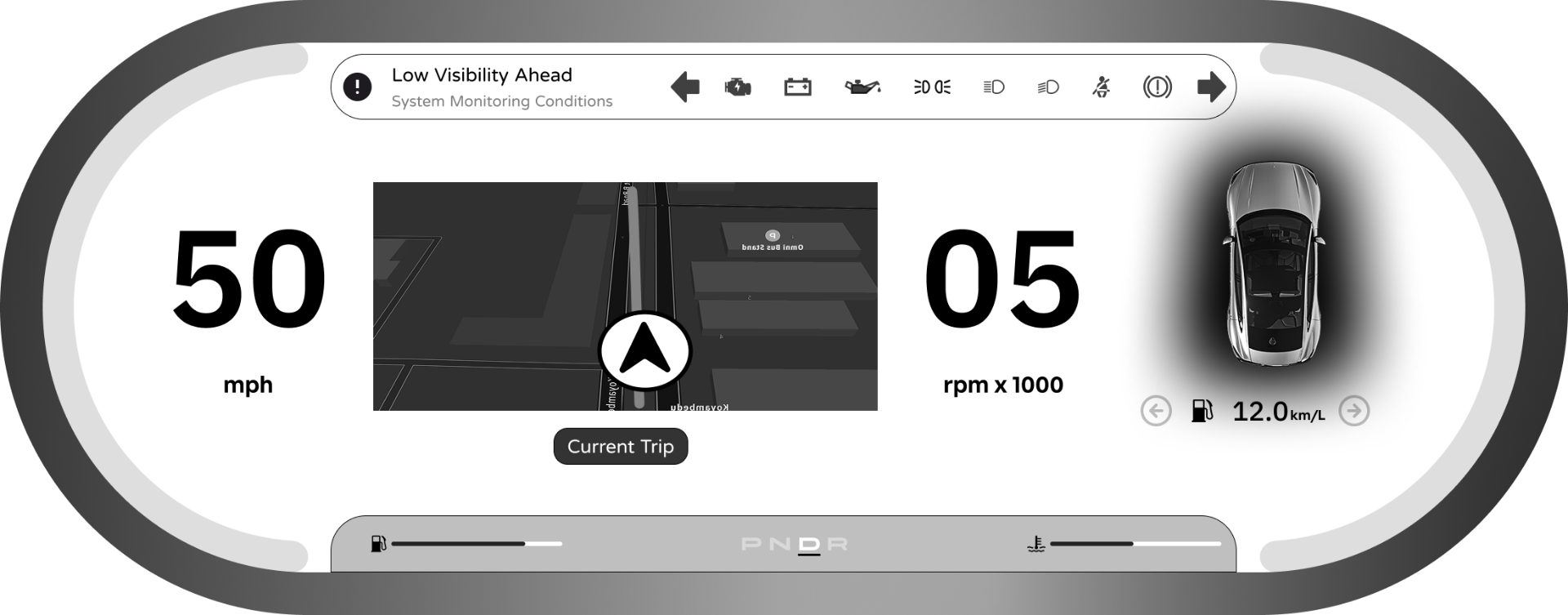
Icon-Rich Alert Panel
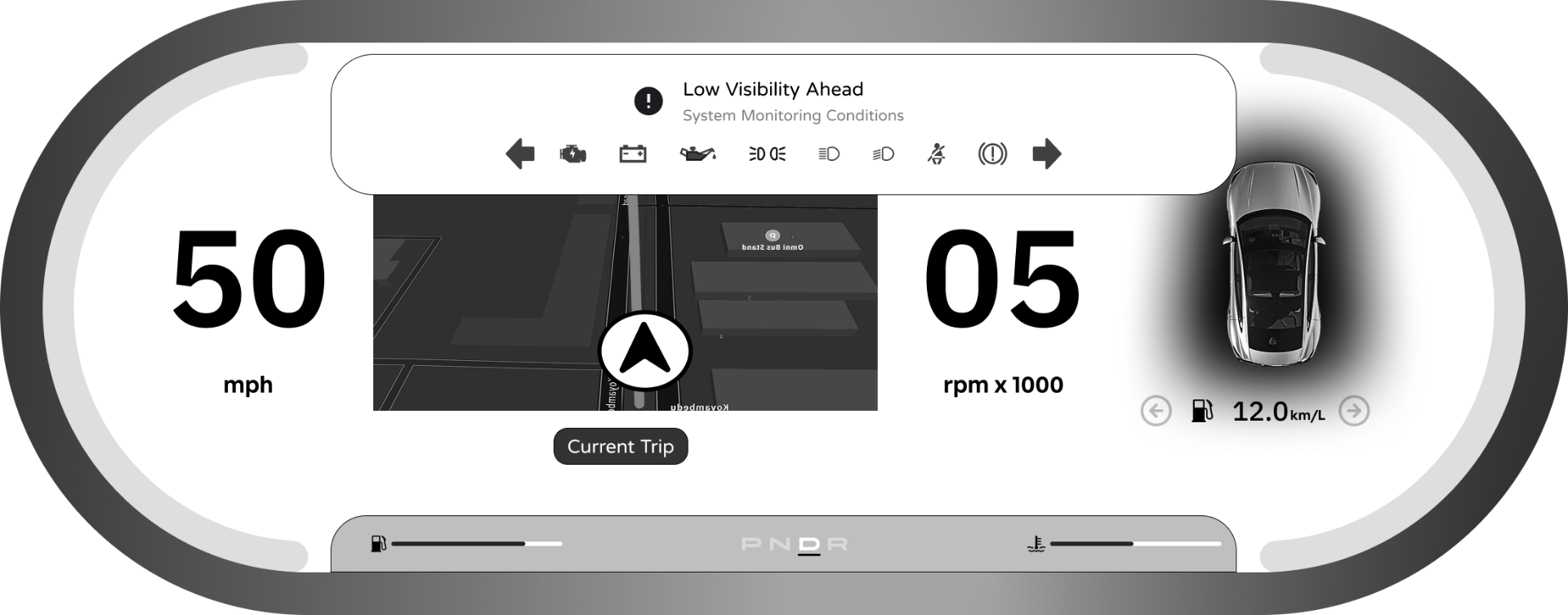
Expanded Overlay Alert
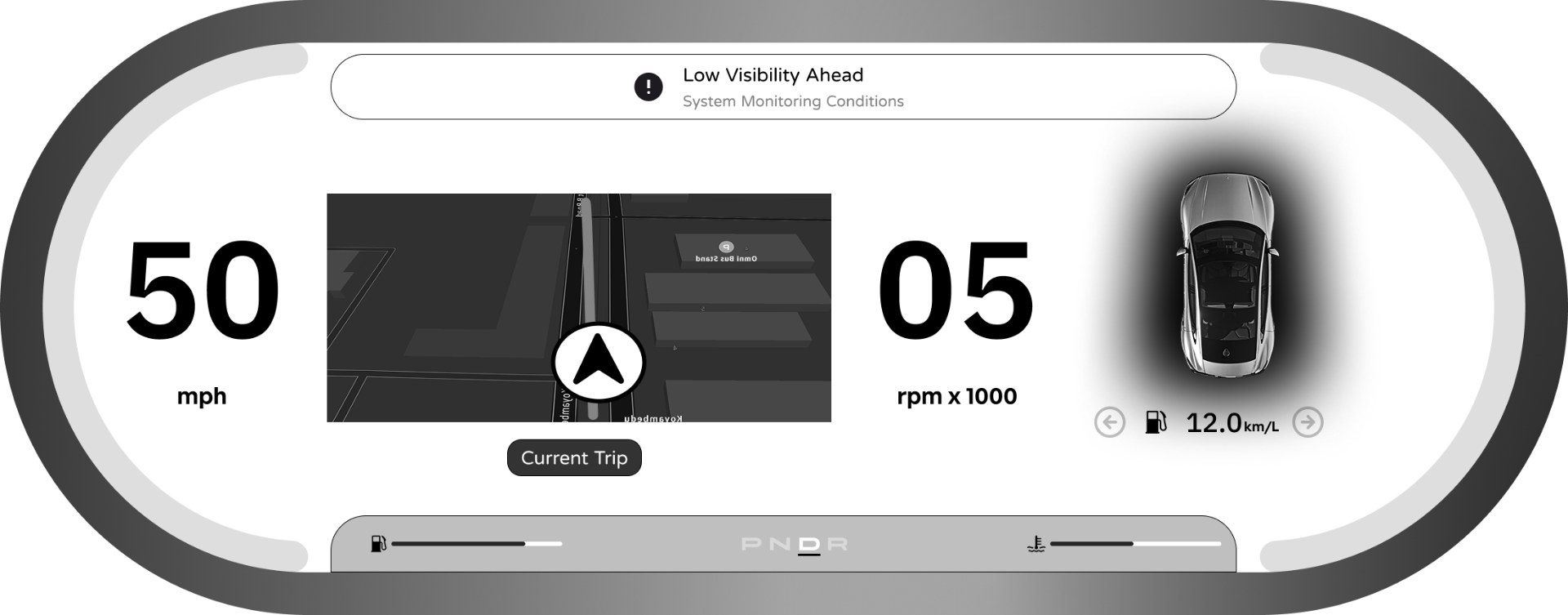
Compact Status Pill
I chose Concept 6 because its compact status pill preserves vehicle context while keeping the driver's attention on the road.
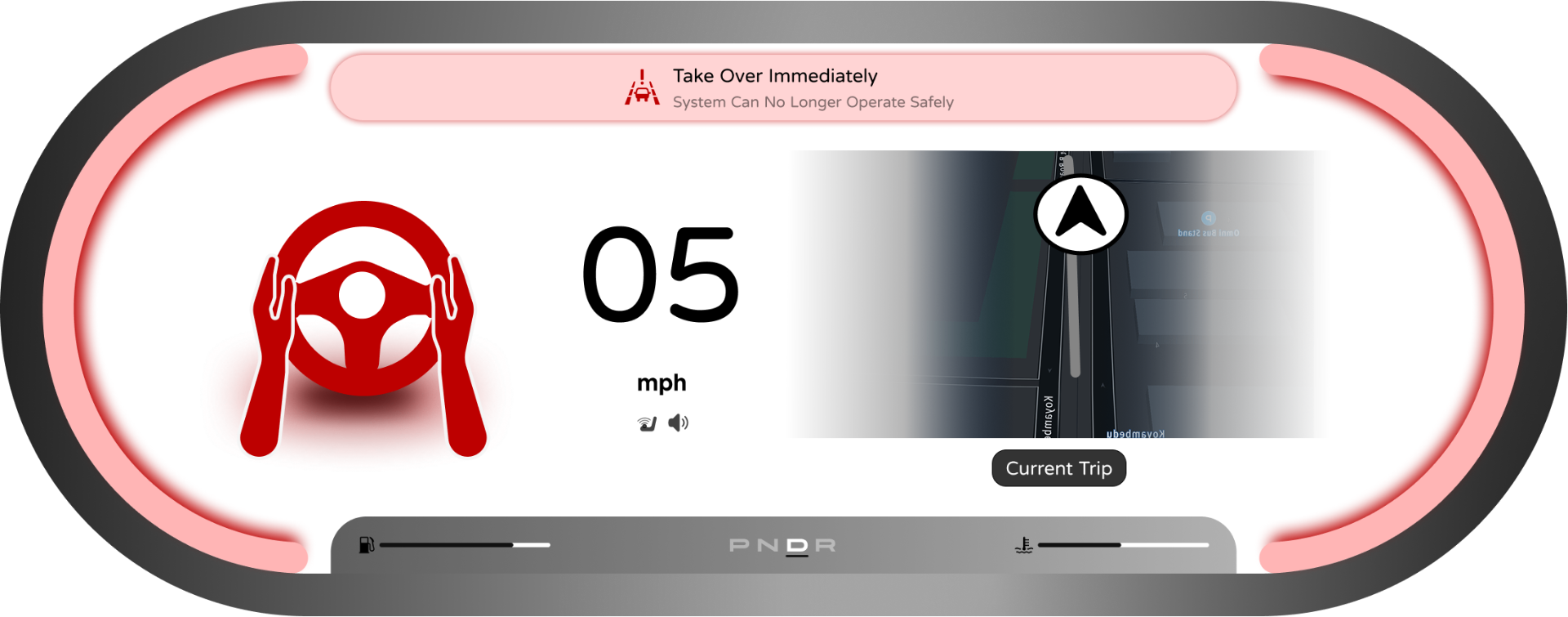
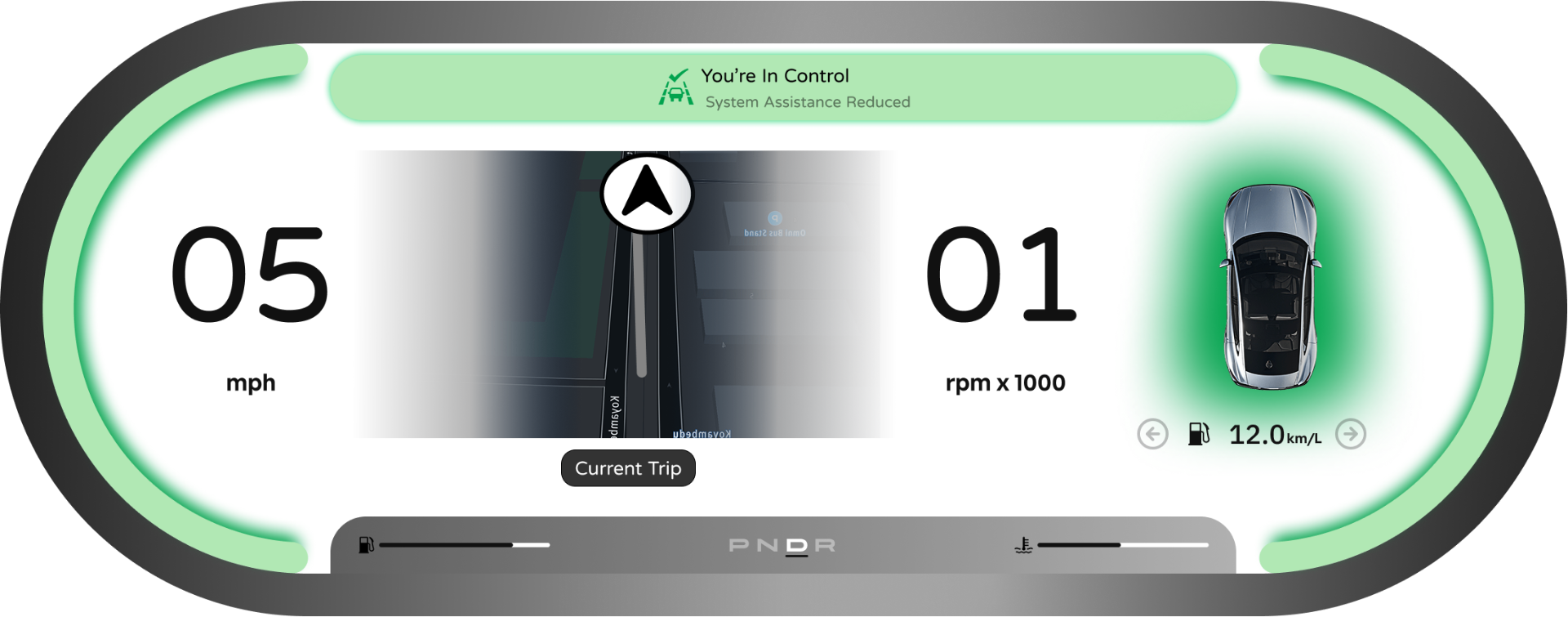
Take over immediately.
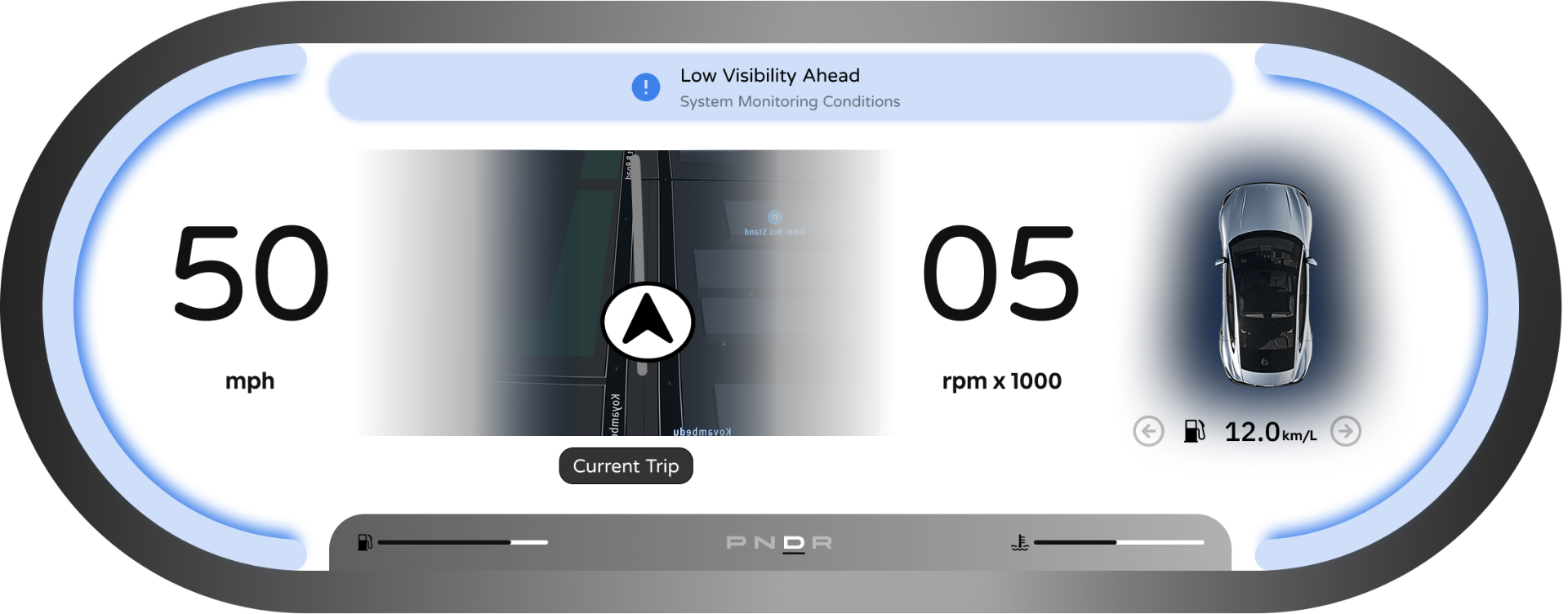
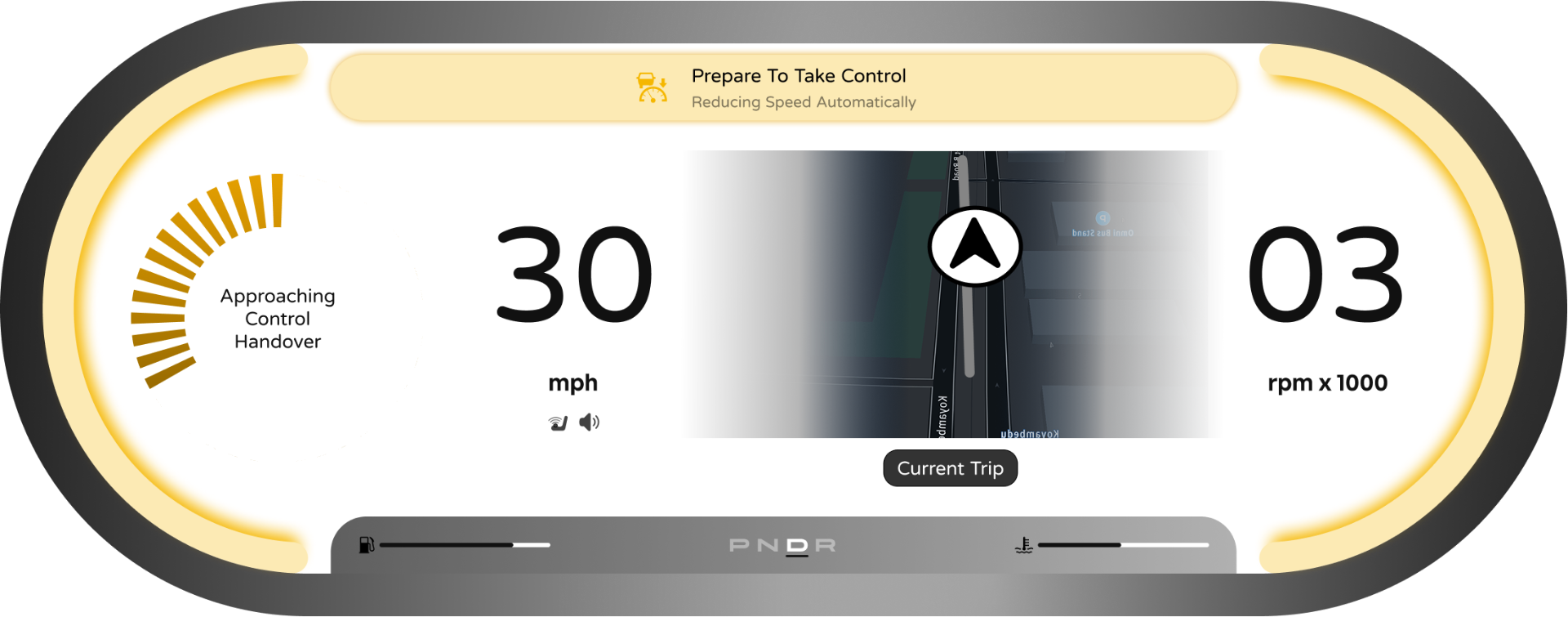
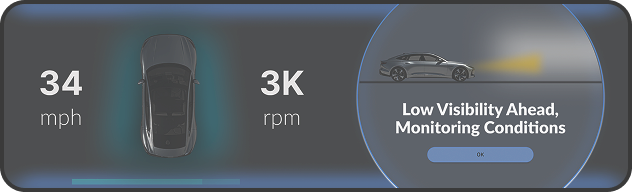
Low Visibility Ahead
System Monitoring Conditions
- Calm blue ambient lighting signals passive system awareness without alarm.
- Full driving information remains visible — speed, rpm, fuel, navigation.
Primary alert text above vehicle info
Preserving hierarchy so the directive reads first, vehicle data second.
Peripheral light panels
Light panels activate on the left and right, engaging peripheral vision.
Reduced info at final alert
In the final alert only speed is shown to the user to reduce information overload.
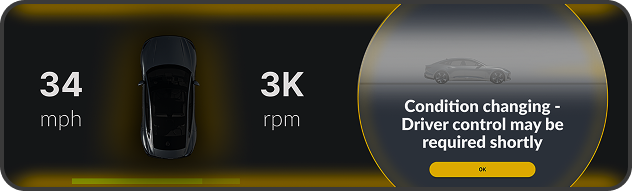
Progressive attention scaling
Color transitions communicate system state without abrupt visual disruption.
"The exploratory findings informed a hypothesis that progressive, multimodal communication may help reduce surprise and improve driver understanding during a takeover request. Controlled simulator evaluation is needed to test this hypothesis."
What was designed
A progressive four-state takeover interface — monitoring, prepare, takeover, in-control — coordinating cluster visuals, peripheral light, sound, and haptic cues into a single escalation language.
What was learned
In a nine-participant scenario survey, respondents described wanting advance warning, a clear reason for the request, and confirmation that control had transferred. Most had limited or no direct experience with automated vehicles.
What remains unvalidated
The interface has not undergone controlled simulator or usability evaluation. Comprehension, reaction time, workload, trust, and takeover quality are untested and remain open questions.
A next phase would test the concept in a driving simulator against a baseline alert, measuring takeover comprehension, reaction time, self-reported workload, trust in automation, and the quality of the resulting takeover manoeuvre.
ACM AutomotiveUI 2026 · Student Research Track
An expanded version was accepted to the ACM AutomotiveUI 2026 Student Research Track for its design-led view of progressive urgency and multimodal takeover communication.
Acceptance reflects the contribution of the design perspective; it is not evidence that the interface is safer or more effective than an alternative.